
Author: Lugean Hogan, REALTOR®/BROKER, ABR, CLHMS
When a Morehead City homeowner asks me, “What is my waterfront home worth?” I never want to answer that question by looking at square footage and a few nearby sales alone.
Waterfront property here is more complicated than that. The water itself matters. So do the dock, the shoreline, boating access, flood information, insurance costs, legal rights, and how the property compares with other waterfront homes buyers have recently considered.
I have lived in Carteret County for more than 40 years, and long before I entered real estate, I worked in sales and service at my family’s boat-building business, Jones Brothers Marine. That background taught me something I still use today: a waterfront property has to be understood from both the land and the water.
In North Carolina, a real estate broker’s comparative market analysis, or CMA, estimates a property’s probable selling price rather than providing a licensed appraisal of market value. North Carolina law distinguishes the two in its rules governing broker price opinions and comparative market analyses.
For me, the goal is not to put a generic “waterfront price” on your home. It is to understand what makes your particular Morehead City property different and how buyers are likely to respond to it.
What Affects Waterfront Home Value in Morehead City?
When I look at a waterfront home, I start with the house, but I do not stop there.
Properties along Bogue Sound, the Newport River, Calico Creek, canals, and other Morehead City waterways can offer very different boating access, views, exposure, shoreline conditions, and everyday use.
The factors I pay close attention to include:
- Waterfront type and location
- Water depth and navigable access
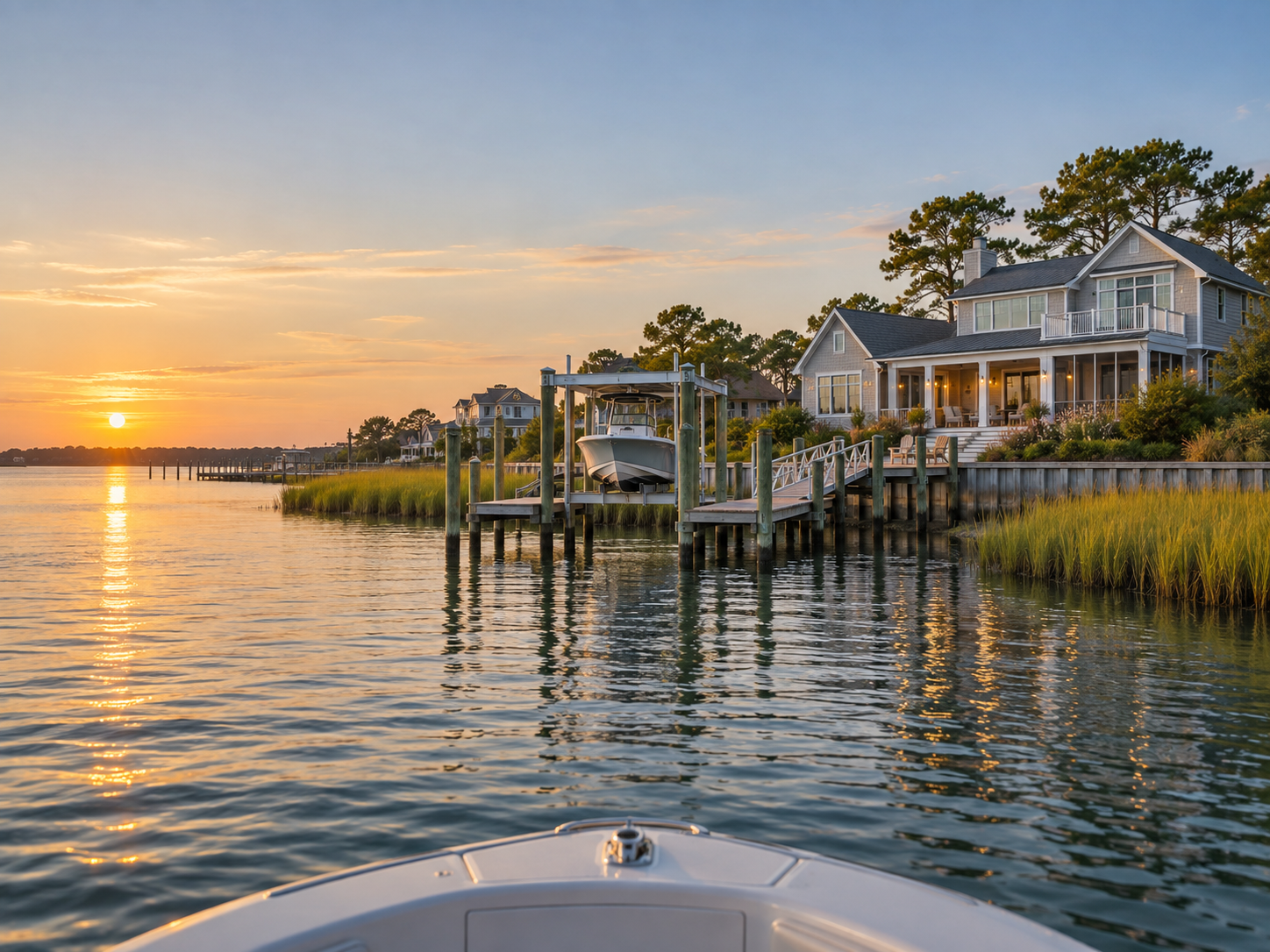
- Dock configuration and condition
- Private or shared waterfront rights
- Bulkhead or shoreline condition
- Flood information and insurance costs
- House and lot condition
- Comparable waterfront sales
Waterfront Type and Location
One of the first things I look at is the kind of waterfront you actually have.
A home directly on Bogue Sound can feel very different from one on a protected creek, canal, or Newport River tributary. Buyers comparing homes and waterfront properties in Morehead City may value broad-water views, protected access, boating convenience, or proximity to town differently.
Neither is automatically better. They simply appeal to different buyers.
That is why I would never assume the closest waterfront sale is automatically the best comparable. Understanding the differences between Bogue Sound and Newport River waterfront properties helps explain why two nearby homes can perform very differently in the market.
Water Depth and Navigable Access
If a buyer owns a boat, this can become one of the most important parts of the conversation.
Having a dock is only the beginning. A buyer may want to know whether the boat they own, or plan to own, can actually get to the dock and use it under normal tidal conditions.
I would want to understand:
- Approximate depth alongside the dock
- Tide conditions when the depth was measured
- Shallow areas between the dock and navigable water
- Dock and slip dimensions
- Boat-lift specifications
- Shoaling or channel limitations
- Bridge or overhead-clearance restrictions where applicable
When people talk about water depth, I also like to know what measurement they are using. NOAA uses tidal datums such as Mean Lower Low Water, or MLLW, for navigation and water-level information. Its official explanation of tidal datums provides useful background information.
Water levels can still change with tides, weather, wind, and local conditions. For that reason, I would rather verify a water-depth claim than tell a buyer something based on memory.
Dock Rights and Condition
I am often asked whether a private dock automatically adds more value than a shared dock.
My answer is no; not automatically.
A buyer is going to look at how the dock actually functions. They may care about:
- Dock condition
- Water depth
- Access to navigable water
- Maintenance responsibilities
- Easements
- Recorded agreements
- Permits and documentation
A well-maintained shared dock with clearly documented rights may work better for a buyer than a private dock with shallow water or unresolved problems.
If your Morehead City home has a shared dock or access easement, I recommend finding those recorded documents before you list. Clear paperwork can answer questions before they become problems during a sale.
How Shoreline Condition Affects Waterfront Home Value
The shoreline deserves just as much attention as the dock.
Bulkheads, riprap, living shorelines, and other shoreline systems can affect how buyers look at a waterfront property. If something appears to need major work, buyers may immediately start thinking about repair costs, permitting, erosion, and future maintenance.
What I do not recommend is applying a generic dollar amount to every bulkhead problem. Waterfront sites are too different for that.
I would look for issues such as:
- Leaning or displaced bulkhead sections
- Cracks or visible deterioration
- Erosion or washout behind the structure
- Corrosion
- Undermining
- Failing tiebacks
- Previous repairs
- Available permits and contractor records
The North Carolina Division of Coastal Management provides guidance on evaluating and stabilizing estuarine shorelines.
If I were helping a homeowner prepare to sell and the shoreline condition was uncertain, I would rather have a qualified professional evaluate it and provide an estimate than simply guess at what buyers might deduct.
For a practical overview of the options, our guide to bulkheads, riprap, and living shorelines on the Crystal Coast explains the differences.
Check Dock and Shoreline Documentation
Permits and paperwork are another area I would rather deal with before the home goes on the market.
North Carolina coastal rules may apply to docks, piers, bulkheads, riprap, and other shoreline work. Requirements depend on the property and the type of project.
The North Carolina Division of Coastal Management explains the state’s coastal development permit types and exemptions.
If you have old permits, contractor invoices, surveys, dock drawings, or shoreline records, gather them. Buyers often become more comfortable when questions about waterfront improvements can be answered clearly.
Our Crystal Coast dock permit guide also explains some of the questions that come up during a coastal sale.
How Flood Risk and Insurance Affect Home Value
Flood information is another subject where I encourage homeowners not to rely on one piece of information alone.
A FEMA flood-zone designation matters, but it does not tell you everything about a property’s flood exposure or what a particular insurance policy will cost.
You can review official flood-hazard information through FEMA’s Flood Map Service Center.
When I am looking at a waterfront property, I want to understand as much of the following as possible:
- Current FEMA mapping
- Available elevation documentation
- Building elevation and design
- Known or documented flood history
- Current property-specific insurance information
- Buyer financing considerations
Insurance costs can influence affordability, so this information matters when buyers are deciding what they are comfortable paying.
What Does an Elevation Certificate Tell You?
An Elevation Certificate provides building-specific elevation information. It can help property owners, buyers, lenders, insurers, and other professionals understand how a structure relates to mapped flood elevations.
What I would not do is treat it as a complete prediction of future flood risk.
Two houses can be in the same mapped flood zone and still have different physical characteristics and insurance costs. That is why I tell homeowners to use information for their own property rather than assuming the neighbor’s situation will be identical.
Our guide to flood zones and elevation certificates on the Crystal Coast goes into that subject in more detail.
Choosing the Right Waterfront Comparable Sales
This is where pricing waterfront property can become tricky.
A sale does not become a good comparable simply because the house is nearby and the listing says “waterfront.”
When I compare a Morehead City waterfront home with recent sales, I want to look at:
- Water body and waterfront setting
- View
- Navigable access
- Dock usability
- Shoreline condition
- Lot characteristics
- Flood considerations
- Home size and condition
- Renovations and quality
- Location relative to boating routes and amenities
For example, a canal home and a home directly on Bogue Sound may be similar in square footage but appeal to very different buyers.
I am trying to answer a simple question: Would the same buyer realistically have considered both properties?
If the answer is no, I would be cautious about treating that sale as a strong comparable.
Why Online Estimates Are Only a Starting Point
I have no problem with homeowners checking an online estimate. It can be a useful starting point.
But waterfront property is one area where I would not stop there.
An online model may know the square footage, tax information, lot size, and nearby sales. It may not fully understand whether the dock works for the buyer’s boat, whether shoreline repairs are coming, or whether a shared-access agreement is clear and recorded.
Those details can change how people see the property.
For a broader explanation of how we approach coastal pricing, you can read about Star Team Real Estate’s coastal home valuation process.
How to Build a Probable Selling-Price Range
When I prepare to discuss pricing with a waterfront seller, I like to work through the property in a logical order.
Verify the House and Lot
First, I confirm the basics.
That includes the living area, bedroom and bathroom count, renovations, condition, lot characteristics, views, and meaningful improvements.
I do not like relying blindly on an old tax record or a prior listing. Properties change.
Document the Waterfront
Next, I look closely at the waterfront itself.
I want to identify:
- Water body
- Dock configuration
- Boat lift
- Approximate usable depth
- Route to navigable water
- Shoreline type
- Known permits
- Shared-access arrangements
These details often explain why one waterfront sale is more useful than another.
Review Flood and Insurance Information
I also gather the best available flood and insurance information for the property.
That can include FEMA mapping, elevation documentation if available, and current property-specific insurance information.
I would not use what a neighbor pays as a substitute. Two homes that look similar from the road can have different insurance considerations.
Analyze Comparable Waterfront Sales
Then I study the closed sales.
I am looking for homes that compete for the same type of buyer, not simply homes within the smallest radius.
Sometimes the strongest comparable is a little farther away but has much more similar boating access, shoreline conditions, views, or waterfront utility.
Establish a Supported Range
Finally, I use that information to develop a probable selling-price range.
Waterfront homes often have fewer truly comparable sales than homes in a large inland subdivision. In those situations, I would rather explain a well-supported range than pretend the market gives us one perfectly precise number.
Should You Make Waterfront Repairs Before Selling?
This is another question where my answer is: it depends.
I would not automatically tell a homeowner to replace a bulkhead or rebuild a dock just because they are preparing to sell.
First, I would want to know:
- What is actually wrong?
- How urgent is the problem?
- What will the repair cost?
- What permits or approvals may apply?
- Will buyers see it as a major objection?
- How have similar properties sold?
Sometimes completing the repair makes the property much easier for a buyer to understand.
In other cases, documenting the condition and obtaining a professional estimate may be enough to price the property properly and negotiate from a position of good information.
Why Morehead City Waterfront Experience Matters
I was born and raised in Eastern North Carolina and have lived in Carteret County for more than 40 years. I have also spent more than 10 years working in real estate and hold the Certified Luxury Home Marketing Specialist designation.
Before real estate, I managed sales and service at Jones Brothers Marine, my family’s boat-building business. Boats and waterfront living were part of my work long before I started listing homes.
That experience is one reason I pay so much attention to details such as dock usability, water access, shoreline condition, and how a property works in everyday life.
At Star Team Real Estate, that local Carteret County knowledge, marine background, and waterfront real estate experience help me look beyond the house itself when helping Morehead City homeowners understand their property.
Frequently Asked Questions
Why can’t I rely only on an online estimate for my Morehead City waterfront home?
An online estimate is a starting point, not a complete valuation of a Morehead City waterfront home. Automated estimates may not fully account for usable water depth, dock rights, shoreline condition, navigable access, permits, or other property-specific waterfront features. I review those details alongside comparable sales before recommending a probable selling-price range.
How much does a failing bulkhead reduce my Morehead City waterfront home’s value?
There is no standard dollar amount that a failing bulkhead reduces a waterfront home’s value. The impact depends on the bulkhead’s condition, repair scope, estimated cost, permitting needs, and how buyers respond to comparable properties. I prefer using a current professional repair estimate instead of applying a generic deduction.
Does a private dock always add more value than a shared dock?
No, a private dock does not automatically add more value than a shared dock. Buyers also consider water depth, navigable access, dock condition, permits, legal rights, and maintenance responsibilities. A well-documented shared dock may be more desirable than a private dock with shallow water or unresolved problems.
Why can two Morehead City homes in the same flood zone have different insurance costs?
Two homes in the same FEMA flood zone can have different insurance costs because the flood-zone designation is only one part of the property’s insurance profile. Building characteristics, elevation information, and other property-specific factors can differ from one home to another. I recommend obtaining current insurance information for the actual property rather than comparing it with a neighbor’s premium.
Do I need an appraisal before listing my Morehead City waterfront home?
You usually do not need an appraisal simply to set a listing strategy for a Morehead City waterfront home. A North Carolina real estate broker can prepare a comparative market analysis that estimates probable selling price using relevant comparable sales and property characteristics. An appraisal is a separate professional valuation that may be required for other purposes.
How often should I update the value of my Morehead City waterfront home?
Update your waterfront home’s probable selling price when you are preparing to sell or when a meaningful property or market change occurs. Examples include a strong nearby waterfront sale, renovation, dock or shoreline work, new flood information, or a noticeable change in buyer activity. If you are getting ready to list, I recommend using current comparable sales rather than relying on an older estimate.
Find Out What Your Morehead City Waterfront Home Could Sell For
If you own waterfront property in Morehead City, I would not want you making a selling decision based only on square footage, a neighborhood average, or an online estimate.
Your house, water access, dock, shoreline, flood information, insurance considerations, and comparable sales all tell part of the story.
At Star Team Real Estate, we can look at those pieces together and help you build a pricing strategy around the property you actually own. You can request a personalized home-value analysis or call us at (252) 727-5656 to talk about your Morehead City waterfront home.
Check out this article next