
Author: Lugean Hogan, REALTOR®/BROKER, ABR, CLHMS
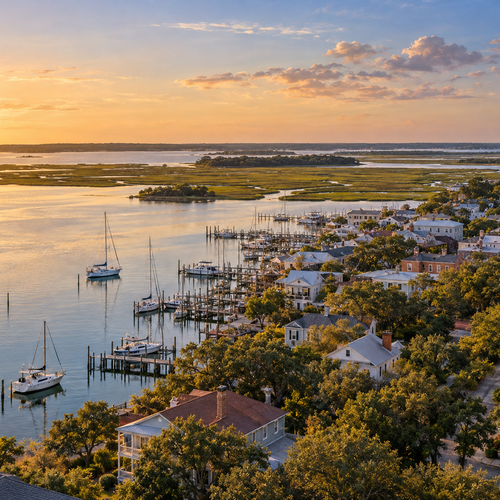
North Carolina gives retirees two very different lifestyles: the Crystal Coast in Eastern North Carolina and the mountains around Asheville in the west.
Both can be wonderful places to retire. The better choice depends less on which region has the prettier scenery and more on how well a specific home and community will support your healthcare needs, mobility, budget, weather preferences, and daily routine.
For many retirees I work with, Carteret County is appealing because of its relatively flat terrain, water-centered lifestyle, access to hospital care in Morehead City, and winters that generally require less snow-and-ice planning than mountain living.
But the comparison deserves balance. Asheville has substantial healthcare resources, while coastal homeowners need to prepare for hurricanes, flood exposure, wind insurance, evacuation, salt air, and waterfront maintenance.
The real question is not simply “coast or mountains?”
It is:
Which specific home, community, road network, healthcare system, and risk profile will still work for you 10 or 20 years from now?
NC Coast vs. Mountains for Retirement: At a Glance
| Retirement Factor | Crystal Coast and Carteret County | Asheville and Western NC |
|---|---|---|
| Healthcare | Hospital care is available in Morehead City, with larger regional medical centers available for some advanced needs. | Asheville has substantial hospital and specialty-care infrastructure. |
| Winter travel | Snow and ice can occur, but winter weather is generally less central to everyday life. | Elevation, snow, ice, steep drives, and road conditions may have a greater effect on winter travel. |
| Storm risk | Hurricane wind, storm surge, coastal flooding, and evacuation require planning. | No coastal storm surge, but severe rainfall, river flooding, wind, and landslides can occur. |
| Home accessibility | Flatter terrain may help, although elevated coastal homes can introduce stairs. | One-level homes may work well, while steep driveways and sloped lots can create challenges. |
| Property costs | Flood, wind, salt exposure, docks, and shoreline maintenance can add costs. | Slope, drainage, road maintenance, retaining structures, and property access may add costs. |
| Lifestyle | Boating, beaches, sounds, working waterfronts, and generally milder winters. | Mountain scenery, cooler summers, hiking, arts, dining, and Asheville amenities. |
Location within each region matters just as much as the region itself.
An Asheville condominium close to medical care is very different from a remote mountain home. Likewise, a one-level home in Morehead City is a very different retirement proposition from an elevated oceanfront property on Bogue Banks.
Healthcare Access on the Coast and in Asheville
Healthcare should be one of the first considerations when choosing a retirement location.
Healthcare on the Crystal Coast
Morehead City is home to Carteret Health Care, which provides emergency care, cardiovascular services, cancer care, imaging, rehabilitation, surgery, orthopedics, and other hospital services.
You can review Carteret Health Care services in Morehead City directly through the hospital.
That gives retirees in Carteret County access to hospital-level care without automatically leaving the county. For some advanced specialties and procedures, patients may still be referred to larger regional medical systems.
For example, ECU Health emergency and trauma services are available in Greenville.
The most useful way to think about Crystal Coast healthcare is therefore:
Local hospital access supported by larger regional medical centers when more specialized care is needed.
Someone considering Morehead City specifically may also want to read our guide to retiring in Morehead City.
Asheville Has Substantial Medical Care
It would be misleading to describe Asheville itself as medically isolated.
Mission Hospital healthcare services in Asheville include emergency care, cardiac services, stroke care, surgery, cancer treatment, orthopedics, and other advanced medical services.
The healthcare question changes when you move farther outside Asheville into smaller mountain communities.
A beautiful property may be farther from a hospital, specialist, pharmacy, or major highway. The same principle applies in Carteret County. A home Down East can involve a different healthcare routine from a home close to central Morehead City.
Before buying, map the actual drive from the property to your preferred hospital, doctors, specialists, pharmacy, grocery store, and other services you expect to use regularly.
Winter Weather and Road Access
The coast often appeals to retirees who want milder winters, but it should not be described as snow-free.
Coastal Winters Can Still Bring Snow and Ice
Eastern North Carolina occasionally experiences meaningful winter weather.
During the January 21–22, 2025 winter storm, the National Weather Service documented significant snowfall across Eastern North Carolina, including Carteret County.
That storm is a useful historical reminder: snow is possible at the coast.
The practical difference is that snow and ice are generally less central to routine winter planning than they are in higher-elevation mountain communities.
Retirees considering the coast should still experience the area outside vacation season. Our guide to living on the Crystal Coast year-round explains what everyday coastal life feels like once summer crowds are gone.
Mountain Road Access Deserves Close Inspection
In the mountains, the road and driveway serving a property can matter almost as much as the home itself.
North Carolina maintains a state snow-clearing policy that prioritizes routes based on factors such as traffic importance, connectivity, and emergency access.
Before buying a mountain home, determine who owns and maintains the road.
Ask whether it is state-maintained, municipal, HOA-maintained, or private. Look closely at driveway grade, shade, drainage, turning areas, and whether emergency vehicles can reach the property easily during difficult weather.
Hurricane Risk vs. Mountain Flood Risk
Weather risk exists in both regions. It simply appears in different forms.
Coastal Risk
Crystal Coast homeowners may need to prepare for hurricane winds, storm surge, coastal flooding, power outages, and evacuation.
Those risks vary greatly from one property to another.
An oceanfront home on Bogue Banks may have a very different exposure from a mainland property farther inland. Even neighboring properties can differ because of elevation, construction, drainage, and proximity to water.
Storm planning is part of coastal homeownership.
Our Crystal Coast hurricane preparedness guide explains the practical questions residents should consider before hurricane season.
Mountain Risk
Asheville and Western North Carolina do not face coastal storm surge. That is an important difference.
However, moving inland does not eliminate tropical-weather risk.
Hurricane Helene demonstrated this in September 2024. The National Weather Service summary of flooding in Western North Carolina documented severe flooding, infrastructure damage, and debris flows across the region.
For homes on steep or sloped land, buyers can also review North Carolina landslide and geologic-hazard guidance.
The comparison is straightforward:
The coast has greater exposure to storm surge and coastal flooding. The mountains avoid storm surge but can still face severe rainfall, river flooding, wind, landslides, and road damage.
Neither region should be treated as risk-free.
Flood Insurance and Coastal Property Costs
Insurance is one of the most important areas to investigate before buying along the coast.
Flood Insurance Is Property-Specific
Flood insurance is not automatically required simply because a house is near the ocean, sound, creek, or river.
FEMA identifies high-risk flood areas through its flood maps. Mortgage and insurance requirements can depend on the property's flood designation, type of financing, and lender.
Buyers should review the specific property rather than make assumptions based on the neighborhood.
Start with FEMA flood zones and flood-risk guidance.
Our guide to Crystal Coast flood zones and elevation certificates explains how those concepts apply during a local home purchase.
What an Elevation Certificate Does
An Elevation Certificate can document important characteristics of a building, including information about the structure's elevation in relation to flood risk.
It does not, by itself, determine what an owner will pay for flood insurance.
FEMA Elevation Certificate guidance explains how the document may be used when evaluating a property and flood-insurance options.
For a retirement buyer, the practical lesson is simple: obtain the documents that help you understand the actual home rather than relying only on the flood-zone label.
Homeowners Insurance Does Not Cover Flooding
A standard homeowners policy generally does not cover flood damage.
The North Carolina Department of Insurance flood insurance guidance explains the distinction between homeowners coverage and separate flood insurance.
Depending on the property and insurer, wind and hail coverage may also require additional attention.
Before purchasing a coastal home, request a complete insurance picture rather than relying on one general homeowners quote.
Ask about:
- Homeowners coverage
- Flood coverage
- Wind and hail coverage
- Named-storm or wind deductibles
- Exclusions
- Replacement-cost limits
Our guide to Crystal Coast wind and hail deductibles explains why deductible structure can matter as much as the annual premium.
Waterfront Rules and Maintenance
Retiring beside the water can be wonderful, but waterfront property brings responsibilities that an inland house may not have.
North Carolina's coastal development rules govern many activities in designated coastal areas.
Depending on the property and project, rules may affect docks, piers, shoreline stabilization, bulkheads, riprap, and other waterfront improvements.
Buyers should verify current requirements before assuming an existing waterfront structure can be enlarged, replaced, or altered.
If boating is part of your retirement plan, our guide to CAMA dock permits on the Crystal Coast explains additional questions worth asking during due diligence.
Also consider long-term upkeep.
Salt air, docks, decks, exterior fasteners, HVAC equipment, and shoreline structures may require more maintenance than comparable inland features.
Cost of Retiring on the NC Coast vs. Mountains
There is no reliable region-wide answer.
Two homes with similar asking prices can have very different annual ownership costs.
On the coast, expenses may include:
- Flood insurance
- Wind coverage
- Storm deductibles
- Dock maintenance
- HOA assessments
- Salt-related wear
- Shoreline maintenance
In the mountains, expenses can be influenced by:
- Private-road maintenance
- Steep driveways
- Drainage
- Retaining walls
- Slope conditions
- Distance from services
- Property-access improvements
Because both retirement options are in North Carolina, statewide tax rules generally do not create the main distinction between the coast and the mountains.
Property taxes and other local costs, however, vary by jurisdiction and individual property.
The more useful comparison is therefore total ownership cost for the specific home, not an assumption that one entire region is automatically cheaper.
For condos and planned communities, also review what a coastal HOA actually covers before treating monthly dues as the property's total shared cost.
Aging in Place: Look at the Home, Not Just the Region
It is tempting to say that the flatter coast automatically works better for anyone concerned about future mobility.
That is too simple.
An elevated coastal home requiring a full flight of stairs may be harder to manage than an accessible one-level home near Asheville.
On the other hand, a single-level mainland home near Morehead City may be easier to navigate than a mountain property with a steep driveway, multiple exterior steps, or a sloped lot.
When touring retirement homes, ask four practical questions:
- Can you enter the home without climbing a full flight of stairs?
- Are the bedroom, bathroom, kitchen, laundry, and main living area on one level?
- Could you manage the yard, deck, dock, driveway, or retaining structures later in life?
- What would daily life look like if driving became difficult?
Aging in place is ultimately a property-level decision, not merely a coastal-versus-mountain decision.
Retirees planning farther ahead may also find our guide to senior housing alternatives in Coastal North Carolina helpful.
Local Experience Matters When Comparing Retirement Homes
Retirement suitability often comes down to details that are difficult to appreciate during a short vacation.
REALTOR®/Broker Lugean Hogan has lived in Carteret County for more than 40 years and has more than 10 years of committed real estate service. She is an Accredited Buyer's Representative and Certified Luxury Home Marketing Specialist.
Her local experience includes helping buyers understand coastal communities, waterfront considerations, relocation decisions, and the day-to-day realities of living in Carteret County.
Those details matter.
The drive to medical care, bridge access, flood exposure, road conditions, dock maintenance, seasonal traffic, insurance structure, and what a community feels like in February can all matter more in retirement than they do during a summer visit.
Frequently Asked Questions
Is Asheville safer from hurricanes than the Crystal Coast?
Asheville has no coastal storm-surge risk, but it is not protected from hurricane-related hazards. Tropical systems can bring heavy rainfall, river flooding, damaging winds, landslides, debris flows, and road closures to Western North Carolina. The Crystal Coast has additional exposure to coastal flooding and storm surge, so the type of hurricane risk differs between the two regions.
Which has better healthcare for retirees: Carteret County or Asheville?
Both Carteret County and Asheville offer healthcare access, but Asheville has a larger concentration of hospital and specialty services. Carteret Health Care provides local hospital care in Morehead City, while some Crystal Coast residents may travel to larger regional medical centers for specialized treatment. Retirees should compare the actual travel time from a specific home to their preferred hospital, physicians, specialists, and pharmacy.
Does it snow on the Crystal Coast?
Yes, snow can fall on the Crystal Coast, but significant snowfall is uncommon. Eastern North Carolina generally has milder winter conditions than higher-elevation communities in Western North Carolina. Retirees should not consider the Crystal Coast completely snow-free, but snow and ice typically play a smaller role in everyday winter planning.
Is flood insurance required for every Crystal Coast home?
No, flood insurance is not automatically required for every home on the Crystal Coast. Requirements can depend on the property's FEMA flood designation, the type of financing, and lender rules. Even when coverage is not required, buyers should evaluate the home's individual flood exposure and obtain insurance information before purchasing.
Is the NC coast better for retirees with mobility concerns?
The North Carolina coast may offer advantages because much of the terrain is relatively flat, but the individual home matters more than the region. An elevated coastal house with stairs may be harder to navigate than an accessible one-level mountain home. Retirees should evaluate entrances, floor plans, driveways, exterior maintenance, transportation, and access to healthcare when considering aging in place.
What should retirees compare before choosing the NC coast or mountains?
Retirees should compare healthcare access, weather risks, road conditions, insurance, total ownership costs, home accessibility, maintenance needs, emergency planning, and distance to everyday services. They should also experience the community outside peak tourism season. The best retirement location is the one that supports both the lifestyle they want now and the practical needs they may have later.
NC Coast or Mountains: Which Fits Your Retirement?
The Crystal Coast may fit your plans if you want water to be part of everyday life, prefer generally flatter surroundings, value access to hospital care in Morehead City, and are comfortable preparing for hurricanes, insurance considerations, salt exposure, and coastal maintenance.
The Asheville area and Western North Carolina mountains may fit your plans if cooler mountain surroundings, hiking, arts, dining, and Asheville's healthcare infrastructure matter more to you, and you are comfortable examining road grade, winter access, drainage, and slope conditions carefully.
Neither region is automatically the better retirement choice.
The better fit depends on the home, the community, and how you expect to live.
Where to Retire on the Crystal Coast
Once you decide coastal North Carolina may suit you, the next question becomes where on the Crystal Coast.
Morehead City, Beaufort, Newport, Cape Carteret, Bogue Banks, Harkers Island, and Down East offer very different retirement experiences.
Start by comparing the best places to retire on the Crystal Coast.
If you are deciding between quieter working-waterfront communities and barrier-island living, our guide to Down East vs. Bogue Banks can help you narrow the choice further.
The best retirement home is not simply the property that feels wonderful during a weekend visit.
It is the home that still works during a medical appointment, a storm, an insurance renewal, a period when stairs become difficult, and an ordinary Tuesday in February.
If coastal North Carolina fits the life you want to build, Star Team Real Estate can help you compare communities and individual properties with those long-term questions in mind.
Call (252) 727-5656 or learn more about our Coastal North Carolina relocation assistance.
Check out this article next