
Author: Lugean Hogan, REALTOR®/BROKER, ABR, CLHMS
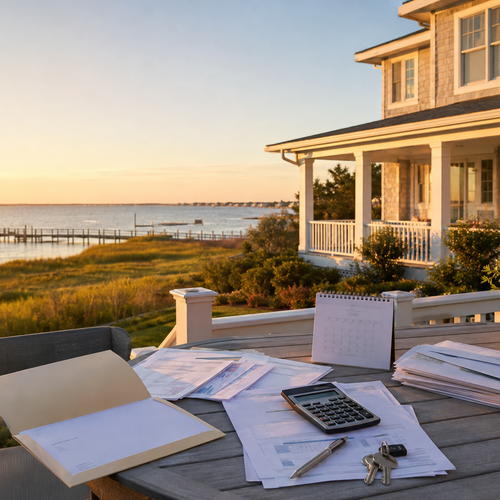
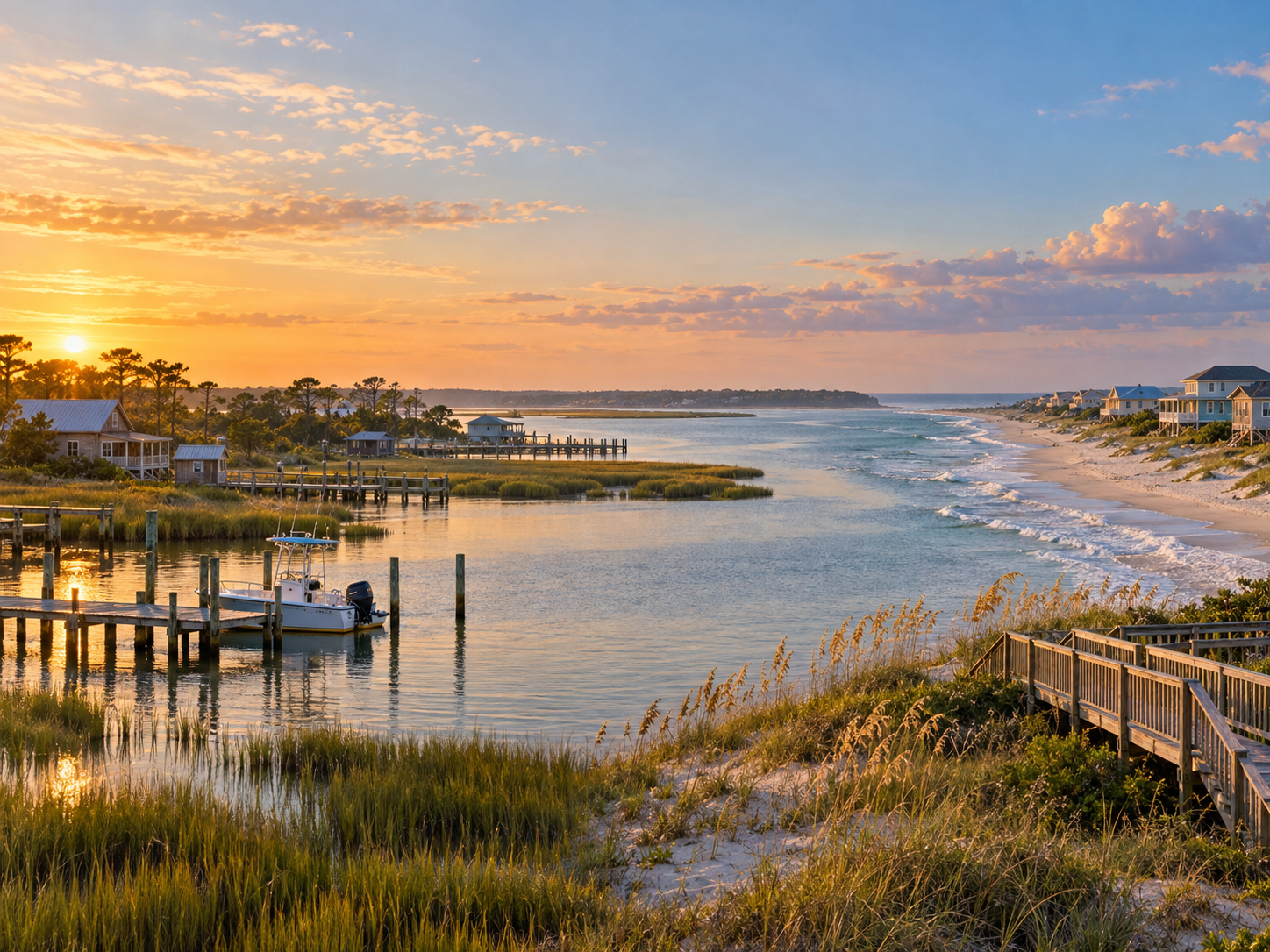
Down East and Bogue Banks are close enough that you can visit both on the same day, but they offer two very different ways to live on the Crystal Coast.
I have lived in Carteret County for more than 40 years, and if there is one thing I would tell a buyer comparing these areas, it is this: do not make the decision based on price alone.
Down East is shaped by Core Sound, marshes, boats, fishing communities, and generations of family property. Bogue Banks is a barrier island where life is more closely tied to the Atlantic Ocean, Bogue Sound, public beach access, and established beach towns.
Neither one is automatically better. The right choice comes down to how you want to live, how you plan to use the water, and what you expect from the property.
Down East vs. Bogue Banks at a Glance
| Factor | Down East | Bogue Banks |
|---|---|---|
| Coastal setting | Core Sound, creeks, marshes, and working-waterfront communities | Barrier island between the Atlantic Ocean and Bogue Sound |
| Communities | Harkers Island, Straits, Gloucester, Marshallberg, Davis, Sea Level, Cedar Island, and nearby communities | Atlantic Beach, Pine Knoll Shores, Indian Beach, Salter Path, and Emerald Isle |
| Local rules | Many properties fall under Carteret County jurisdiction | Rules vary by town; Salter Path is unincorporated |
| Water access | Core Sound, Back Sound, creeks, and boat-oriented access | Atlantic beaches, Bogue Sound, canals, docks, and marinas |
| Flood and insurance | Property-specific | Property-specific |
| Rental potential | Must be evaluated property by property | Must be evaluated property by property |
| Lifestyle | Quieter, more dispersed, maritime-community setting | Barrier-island beach-town lifestyle |
I would not assume one area is automatically cheaper, safer, easier to insure, better for boating, or more profitable as a rental.
Those answers come from the specific property, not simply the community name.
Where Are Down East and Bogue Banks?
Down East generally refers to the eastern part of Carteret County beyond Beaufort toward Core Sound and Cedar Island. Communities commonly associated with the area include Otway, Straits, Gloucester, Harkers Island, Marshallberg, Davis, Williston, Sea Level, Atlantic, and Cedar Island.
If you spend time there, you quickly understand that Down East is not just a location. Water, boats, marshes, commercial fishing traditions, and family land are still part of everyday life.
That connection is one reason the area feels so different from other coastal communities. Our guide to what makes the Down East lifestyle different goes deeper into what draws people there.
Bogue Banks is physically different. According to Carteret County’s official Bogue Banks overview, the barrier island includes Atlantic Beach, Pine Knoll Shores, Indian Beach, the unincorporated community of Salter Path, Emerald Isle, and Fort Macon State Park.
On Bogue Banks, you are living between the Atlantic Ocean and Bogue Sound. That geography shapes the beaches, boating, development patterns, insurance considerations, and day-to-day experience of owning property there.
How Land Use and Property Rules Differ
One of the first questions I ask about a coastal property is simple: who has jurisdiction over it?
Carteret County Planning and Development administers planning, zoning, floodplain, and development regulations for areas under county jurisdiction. Many Down East properties are in unincorporated areas, so county regulations may apply directly.
But I would never translate “unincorporated” into “you can do whatever you want.”
A property may still be affected by zoning, deed restrictions, septic requirements, floodplain regulations, shoreline rules, and other limitations.
On Bogue Banks, incorporated communities such as Atlantic Beach, Pine Knoll Shores, Indian Beach, and Emerald Isle can have their own ordinances. If the property is in an HOA or condominium community, there may be another set of rules to review.
So instead of asking:
“Which area has fewer restrictions?”
I would ask:
“What can I legally and practically do with this particular property?”
That matters if you want to add a dock, renovate, operate a vacation rental, add another structure, keep a boat on the property, or make major changes later.
Which Area Is Better for Boating?
Having spent years managing sales and service at Jones Brothers Marine before my real estate career, I probably look at waterfront property a little differently than many people do.
I look at the water before I fall in love with the kitchen.
A beautiful home with a beautiful dock is not necessarily a good boating property.
Boating Down East
Down East properties can provide access to Core Sound, Back Sound, The Straits, creeks, and waterways leading toward Cape Lookout.
For someone who fishes, boats regularly, or simply wants to spend a lot of time on the water, that can be a major part of the appeal.
But every shoreline is different.
Water depth, tides, shoaling, exposure to wind, the dock configuration, and the route from your property to navigable water all matter. A dock can look perfect in a photograph and still not work for your boat.
That is why I encourage buyers to look beyond the phrase “waterfront.” Our guide to evaluating Down East water access before buying explains why the view from the porch and the usefulness of the water should be evaluated separately.
Boating on Bogue Banks
The sound side of Bogue Banks can also offer excellent boating opportunities through private docks, canals, neighborhood facilities, and marinas.
Here again, I would want more information than “boat access.”
How deep is the water at the dock?
What is the shallowest point between the property and open water?
Are there bridges along the route?
What happens at low tide?
Those details matter much more than a broad description in a listing.
Our guide to evaluating deep-water waterfront homes on the Crystal Coast provides a practical framework for looking at these properties through a boater's eyes.
Can You Add a Private Dock?
This is another place where buyers can get ahead of themselves.
A waterfront lot does not automatically mean you can build the dock you are picturing.
Docks, piers, and other shoreline improvements may require CAMA authorization or other approvals depending on the location and proposed project. North Carolina DEQ maintains the official CAMA coastal permitting guidance for determining which approval process may apply.
If dock potential is important to your purchase, I would investigate it before paying a premium for the property.
Our guide to CAMA dock permits on the Crystal Coast is a good place to start, but the final answer should come from the appropriate permitting authorities for that specific property.
How Flood and Insurance Risks Compare
This is one area where I never like general assumptions.
It is easy to look at Bogue Banks and think, “It's a barrier island, so insurance must always be worse.”
It is just as easy to look at the Down East and think, “It's on the mainland side, so it must be safer.”
Neither assumption is reliable.
Flood exposure is property-specific.
For certain loans secured by improved property in a Special Flood Hazard Area, federal law can require flood-insurance coverage. Buyers can review the federal flood-insurance purchase requirements, but I would also confirm the exact requirements with the lender and insurance professional handling the property.
A flood-zone designation also does not tell you exactly what insurance will cost.
Elevation, construction, coverage choices, building characteristics, and the insurer's assessment can all affect the quote.
That is why I prefer real numbers over assumptions. When you are seriously comparing two properties, get actual insurance quotes for both.
An Elevation Certificate can also provide useful building and elevation information. If one already exists, ask to review it and find out whether additional elevation information would be helpful to your insurer, lender, surveyor, or local floodplain administrator.
Our guide to flood zones and Elevation Certificates for Crystal Coast buyers explains what buyers should look at during due diligence.
Compare Wind and Hail Coverage
Flood insurance is only one part of owning property on the coast.
The North Carolina Department of Insurance windstorm and hail guidance explains that wind and hail coverage may not always be included in a standard homeowners policy for coastal properties. Depending on the insurer and location, separate coverage may be needed.
I also tell buyers not to look at the premium and stop there.
Look at the deductible.
A percentage deductible can mean a much larger out-of-pocket expense than many buyers expect.
Our guide to understanding Crystal Coast wind and hail deductibles explains why that number deserves attention before you buy.
Vacation Rental Potential: Down East vs. Bogue Banks
If rental income is part of your plan, this comparison deserves careful thought.
I would not assume that every Bogue Banks property will be a strong vacation rental. I also would not automatically rule out Down East.
The answer depends on the property.
Rental viability can be affected by jurisdiction, deed restrictions, HOA or condominium rules, occupancy limits, septic capacity, parking, insurance, and the way you intend to operate the rental.
Before relying on projected income, verify the rules. Our Coastal North Carolina short-term rental rules guide explains the different layers buyers should check.
Then look at the actual math.
A property can show impressive gross bookings and still be disappointing after management fees, taxes, insurance, utilities, repairs, furnishings, reserves, and financing.
The Coastal North Carolina vacation-rental cash-flow guide can help you compare what a property earns with what it costs to own.
Property-Level Due Diligence Before You Buy
If there is one point I hope buyers take away from this article, it is this:
Do not buy the label. Buy the property.
Down East and Bogue Banks are not two uniform markets. Even neighboring waterfront homes can have very different risks, restrictions, and ownership costs.
Here is what I would check.
Check the Water
If boating is important, verify depth, tides, navigation routes, bridge clearance where relevant, dock configuration, and channel conditions.
Do not rely only on listing terms such as “deep water,” “navigable,” or “boat access.”
Check Flood and Insurance Costs
Review the property's flood information and request actual insurance quotes.
How far the home sits from the ocean is not enough information to estimate the real cost.
Check Dock and Shoreline Conditions
Look closely at the dock, pilings, boat lift, bulkhead, riprap, or other shoreline improvements.
Ask about permits, age, condition, maintenance history, and likely future repairs.
Waterfront improvements can be wonderful assets, but they can also become significant expenses.
Check Property Restrictions
Review zoning, deed restrictions, HOA documents, condominium rules, septic capacity, and local ordinances before assuming your plans are allowed.
A beautiful property is not a good purchase if it cannot do what you need it to do.
Compare Total Ownership Cost
The purchase price is only the beginning.
Insurance, HOA dues, shoreline maintenance, dock repairs, utilities, septic systems, exterior maintenance, and reserves can make two homes with similar prices very different financially.
Our guide to the real cost of owning a Crystal Coast home beyond the mortgage can help you build a more realistic comparison.
Lifestyle Trade-Offs to Test Before You Buy
Once the property itself checks out, I would turn the conversation back to something much more personal:
How do you actually want to live?
Down East may appeal to you if you want quiet, space, boating, fishing, marsh views, and a strong connection to Core Sound's maritime communities.
Bogue Banks may feel more natural if you want Atlantic beach access, barrier-island living, established beach towns, and easier access to restaurants, shops, and visitor-oriented amenities.
Neither choice is right for everyone.
Spend time in both places before you decide.
Drive from the property to the grocery store, healthcare, restaurants, and the places you expect to visit regularly. If you own a boat, I would also want to understand the route from the dock to the water you plan to use.
A location can be beautiful on a Saturday afternoon and still not fit the way you want to live every day.
Why Local Expertise Matters for Waterfront Buyers
At Star Team Real Estate, I bring more than 40 years of living in Carteret County, more than 10 years of real estate service, and my Certified Luxury Home Marketing Specialist designation to buyers comparing Down East, Harkers Island, and Bogue Banks properties.
Before real estate, I managed sales and service at Jones Brothers Marine, my family's Eastern North Carolina boat-building business. That experience still shapes the questions I ask when I walk on a waterfront property.
I want to know about the dock.
I want to understand the water.
I want to know where that boat is going at low tide.
And I want the buyer to understand the things that may cost money after closing—not just the things that look beautiful during the showing.
Of course, a REALTOR® does not replace an attorney, surveyor, engineer, lender, insurance professional, or permitting authority. My role is to help buyers recognize the right questions early and bring the right professionals into the conversation before a problem becomes an expensive surprise.
Around here, people often say, “Ask Lugean.”
That is exactly how I approach these decisions. Ask the questions first. Then decide whether the property truly fits.
Frequently Asked Questions
Is Down East cheaper than Bogue Banks?
Down East is not always cheaper than Bogue Banks. Home prices in both areas depend on the specific property's location, water access, lot size, condition, elevation, improvements, and current market demand. Buyers should compare individual properties and relevant recent sales rather than assume one entire area costs less.
Do I need flood insurance on Down East or Bogue Banks?
Flood insurance requirements depend on the specific property, flood designation, financing, and insurer requirements, not simply whether the home is in Down East or on Bogue Banks. Certain financed properties in Special Flood Hazard Areas can be subject to federal flood-insurance requirements. Buyers should verify the exact parcel with their lender and insurance professional.
Can I use a Down East property as a short-term rental?
Some Down East properties may be used as short-term rentals, but the answer depends on the individual property. Buyers should check Carteret County requirements, zoning, deed restrictions, HOA rules if applicable, septic capacity, insurance, and any other use limitations before counting on rental income.
What should I verify before buying waterfront property for my boat?
Before buying waterfront property for a boat, verify water depth, tides, the full navigation route, dock configuration, channel conditions, and bridge clearance where relevant. Buyers should also confirm permits for existing docks and other waterfront improvements. A property can have a beautiful water view and still be unsuitable for a particular boat.
Can I build a dock on a Down East or Bogue Banks property?
Waterfront ownership does not automatically guarantee that you can build a dock in Down East or on Bogue Banks. CAMA requirements, shoreline conditions, riparian considerations, navigation, and other approvals may affect what can be constructed. Buyers should confirm dock feasibility with the appropriate permitting authorities before relying on future dock potential.
What should I compare before choosing between Down East and Bogue Banks?
Buyers comparing Down East and Bogue Banks should look at water access, flood exposure, insurance quotes, property restrictions, dock and shoreline condition, ownership costs, rental rules, and everyday convenience. Down East generally offers a quieter Core Sound and maritime-community lifestyle, while Bogue Banks offers a barrier-island setting with Atlantic beach access. The best choice depends on which individual property and lifestyle fit the buyer's goals.
Choosing Between Down East and Bogue Banks
Down East and Bogue Banks give you two very different ways to enjoy life near the water in Carteret County.
Bogue Banks offers the barrier-island experience between the Atlantic Ocean and Bogue Sound. Down East offers Core Sound communities where boats, marshes, working-waterfront traditions, and generations of local history remain part of everyday life.
I would not choose one because someone tells you it is the “better” coast.
Choose the property where the water access works, the insurance makes sense, the rules fit your plans, the ownership costs fit your budget, and the lifestyle feels like yours.
If you are comparing homes in Down East, Harkers Island, Atlantic Beach, Pine Knoll Shores, Indian Beach, or Emerald Isle, Star Team Real Estate can help you work through those details property by property. Learn more about our buyer representation for Coastal North Carolina properties or call (252) 727-5656 and let's talk about what you want from life on the Crystal Coast.
Disclaimer: This article is for general educational purposes and is not legal, insurance, engineering, surveying, environmental, lending, or permitting advice. Property conditions and requirements vary. Verify decisions involving a specific property with the appropriate government agencies and qualified professionals.
Check out this article next