
By Lugean Hogan, REALTOR®/BROKER, ABR, CLHMS
Water access changes how buyers evaluate Down East coastal property.
In Harkers Island and nearby Down East communities, it is not just about having a pretty view. Water access affects boating, fishing, daily convenience, flood-risk questions, maintenance, and long-term enjoyment.
Around Core Sound, Back Sound, The Straits, and Cape Lookout, the better question is not simply, “Is it near the water?” It is, “Can I use the water the way I hope to use it?”
I have lived in Carteret County for more than 40 years, and I have learned that water means different things in different parts of the Crystal Coast. A property with usable access may support kayaking, boating, fishing, and trips toward nearby barrier islands. A property with limited or shallow access may still be beautiful, but it may not function the same way day to day.
For buyers comparing Harkers Island homes for sale, that difference matters. This guide explains what to evaluate before choosing a Down East water-access property and why local knowledge matters before making that decision.
Water View vs. Water Access vs. Deep-Water Access
A water view means you can see the water. Water access means you have a practical way to reach or use it. Deep-water access generally means the water may support larger boats more reliably, although the exact depth, route, tide, and channel conditions still need to be verified.
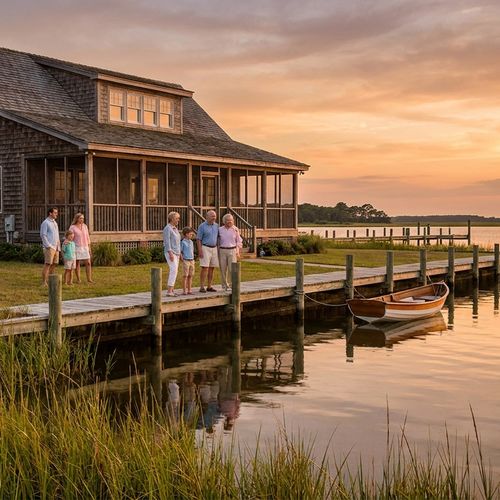
These differences matter in Down East communities. A home may have a beautiful view across Core Sound but limited boat usability. Another home may have a more modest view but better access to a protected creek, dock, or navigable channel.
Before making an offer, buyers should ask:
- What is the approximate water depth at low tide?
- Is the access private, shared, public, or through a marina?
- Can the dock support the buyer’s boat size and intended use?
- Is there a lift, ramp, protected basin, or nearby public access point?
- Are there permitting or repair limits on the dock or shoreline?
These details can affect daily convenience more than the view itself. I have seen buyers fall in love with a view first, then realize later that the water access does not fit the way they hoped to live. It is much better to ask those questions early.
Why Tides Matter Around Harkers Island
Tides can change how usable a property feels. Around Harkers Island and nearby waters, a channel that looks easy at high tide may become shallow or difficult at low tide.
Buyers should review NOAA Tide Predictions for Harkers Island and visit the property at different tide stages when possible. A single showing may not reveal how the water behaves throughout the day.
This is especially important for buyers who plan to keep a boat at the property. A dock that works for a shallow-draft skiff may not work for a larger boat. A creek that feels convenient at one tide may require more planning at another.
That does not mean a shallow-water property is a bad choice. It may be perfect for kayaking, crabbing, smaller boats, or quiet soundside living. The key is knowing what you are buying and matching the property to the way you want to use it.
How Water Access Shapes the Down East Lifestyle
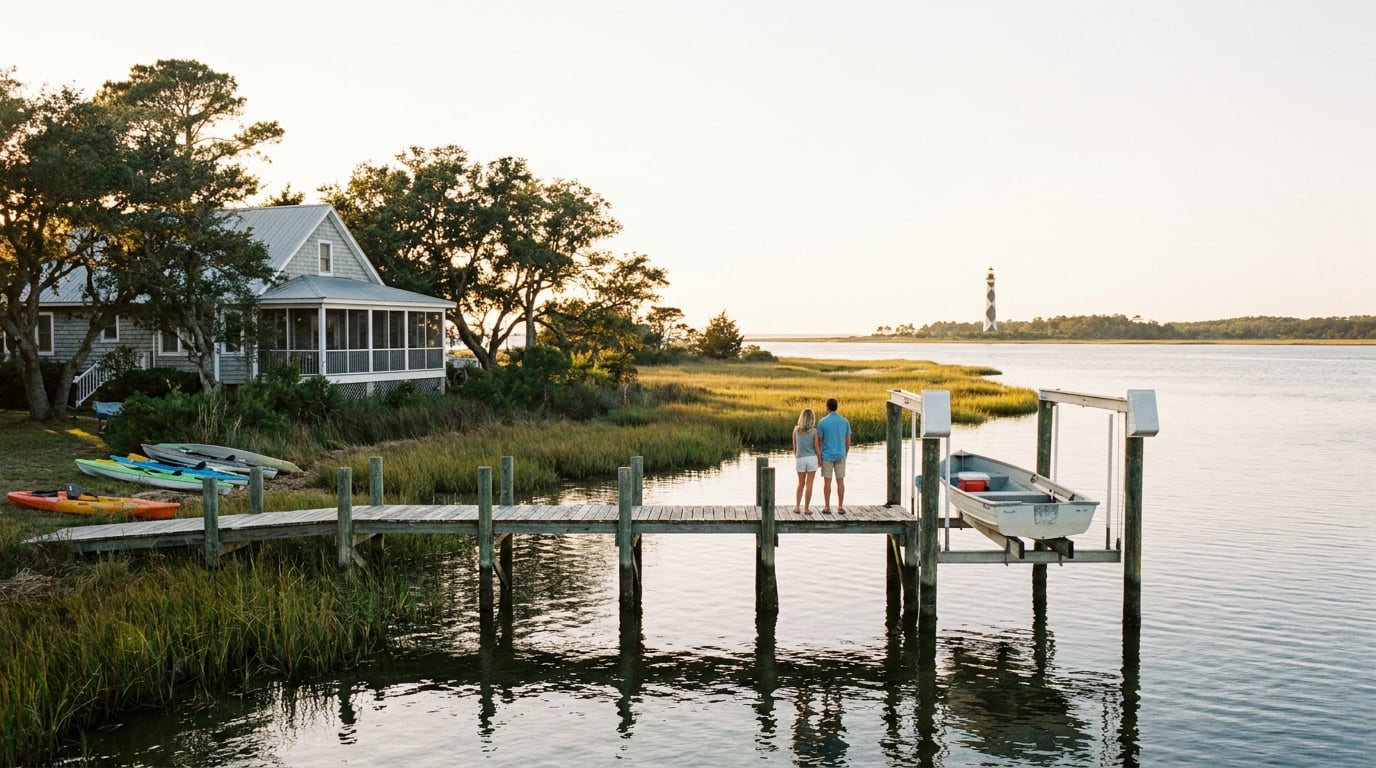
In Down East communities, water access can expand the way a property functions. For many buyers, it means easier fishing, crabbing, kayaking, sunset rides, and trips toward Cape Lookout.
Harkers Island is closely tied to Cape Lookout National Seashore. That local geography matters because many buyers are drawn to the area for boating routes, barrier-island access, and the quieter maritime rhythm of the Crystal Coast.
For some homeowners, good water access supports a daily routine. It can make it easier to launch a kayak before breakfast, clean fishing gear after a day on the sound, or keep a small boat ready without hauling it to a public ramp.
For others, water access is about flexibility. Even if they do not boat every week, they value the option to use the water without depending on crowded ramps or distant marinas.
That is one of the things I love about Down East. The water is not just a backdrop. It is part of how people gather, work, relax, and stay connected to the place.
What Buyers Should Check Before Relying on a Dock
A dock can add real convenience, but buyers should not assume every dock is equally usable or easy to modify. In coastal North Carolina, dock construction, pier replacement, dredging, and shoreline work may involve CAMA rules, local review, and other regulatory requirements.
The North Carolina CAMA permit types include major permits, general permits, minor permits, and certain exemption certificates depending on the project. Buyers should rely on current agency guidance rather than old summaries or assumptions from a prior owner.
Before purchasing a Down East waterfront property, ask about:
- Whether the dock is permitted
- Whether past repairs were documented
- Whether the dock can be repaired, replaced, or expanded
- Whether boat lifts, bulkheads, riprap, or dredging are allowed
- Whether wetlands, shellfish waters, submerged aquatic vegetation, or public trust waters affect future work
This is where local guidance matters. The right questions can help a buyer avoid surprises during due diligence.
When I talk with buyers about docks, I like to slow the conversation down. A dock is not just a feature on a listing sheet. It is something that needs to work with the water, the permits, the boat, the weather, and the way the owner plans to live.
Flood Risk and Insurance Questions to Review Early
Water access also brings flood-risk questions. That does not mean buyers should avoid coastal property. It means they should review the facts early enough to make an informed decision.
FEMA’s Flood Map Service Center is the official place to search flood maps by address. Buyers can also use the North Carolina Flood Risk Information System to review flood hazard information for North Carolina properties.
Flood maps are only one part of the decision, but they help buyers understand elevation, lender requirements, insurance questions, and long-term ownership considerations.
For a deeper look at related expenses, this guide to the hidden costs of owning a Crystal Coast waterfront home can help buyers think through maintenance, insurance, and shoreline-related questions.
I always encourage buyers to look at these questions before they are emotionally attached to a property. Coastal living is wonderful, but it is easier to enjoy when you understand the responsibilities that come with it.
Shoreline Rules and Long-Term Maintenance
A waterfront property’s long-term value depends on more than location. It also depends on whether the water access remains usable, maintainable, and legally workable over time.
Properties with stable, protected access often feel more practical. Properties that may require frequent dredging, dock repairs, bulkhead work, or erosion control can still be desirable, but buyers should understand the likely process and responsibility.
The NC Dredge and Fill Law applies to dredging or filling in estuarine waters and state-owned lakes. That matters because maintenance excavation, shoreline work, and access improvements may not be simple homeowner decisions.
Buyers may also find the NOAA Sea Level Rise Viewer useful as an exploratory planning tool. It should not replace property-specific advice, but it can help buyers ask better questions about elevation, access, drainage, and future coastal conditions.
A good waterfront purchase is not only about how the property looks today. It is also about whether the access, shoreline, and improvements make sense for the years ahead.
Features That Make Water Access More Useful
The best Down East water-access properties often combine water, protection, and practical infrastructure. A good view is wonderful, but the most useful properties usually have features that support daily coastal living.
Useful features may include:
- A permitted private dock
- Adequate water depth at lower tides
- A boat lift suited to the vessel
- Protected shoreline or natural shelter
- Storage for fishing gear, kayaks, and boating equipment
- Outdoor water and power near dock areas
- Safe access from the house to the water
- Clear records for permits, repairs, and improvements
Buyers should also think about trailer parking, fish-cleaning space, storm preparation, drainage, and future repairs. These details may not be the most exciting part of a showing, but they often matter after closing.
A property that works well on a quiet sunny day also needs to make sense when you are storing gear, preparing for weather, maintaining a dock, or getting the boat ready for the weekend.
Why Local Knowledge Matters
Down East properties can be difficult to evaluate from listing photos alone. Two homes may both be described as waterfront, but one may offer true boating convenience while the other mainly offers a view.
Star Team Real Estate has served Crystal Coast buyers and sellers for more than 20 years, with specific experience in Harkers Island, Down East communities, and waterfront property questions involving access, lifestyle fit, and resale considerations. Lugean Hogan brings more than 10 years of committed real estate service, a Certified Luxury Home Marketing Specialist designation, and over 40 years of Carteret County life experience to these conversations.
That local and boating background matters. Before real estate, I managed sales and service at Jones Brothers Marine, my family’s respected Eastern North Carolina boat-building business. That experience taught me to look at water access practically, not just emotionally.
For buyers asking whether a dock, creek, channel, or soundfront setting fits their intended use, that background can help turn vague listing language into practical questions.
If you want a broader framework for evaluating coastal expertise, this guide on choosing a waterfront property specialist in Coastal North Carolina explains what buyers should look for.
Questions to Ask Before Buying Down East Water Access
Before buying a Down East water-access property, start with one practical question: “What do I want this property to let me do?”
A buyer who wants quiet water views may need a different property than a buyer who wants to keep a boat in the water year-round. A buyer who wants kayaking and birdwatching may not need the same access as someone who wants to reach fishing grounds quickly.
Helpful questions include:
- What waterway does the property access?
- Is the access usable at low tide?
- What boat size can reasonably use the dock or channel?
- Are there known shoaling issues?
- Is the dock permitted and in good condition?
- Are there repair or replacement restrictions?
- What flood zone is the home in?
- What insurance questions should I investigate?
- Does the shoreline show erosion or drainage concerns?
- How exposed is the property during storms?
For buyers comparing multiple coastal homes, this guide on how to compare two beach homes with different access types can help organize the decision.
These are not questions meant to scare buyers away. They are questions meant to help buyers make a confident decision.
When Water Access May Be Worth Paying More For
Water access may be worth paying more for when it improves the way the property can be used. A private dock, dependable access, and a protected setting can add convenience that buyers feel throughout the year.
However, buyers should not pay more just because a listing says “water access.” The value depends on the quality of that access, the condition of the improvements, the flood and insurance picture, and whether the property supports the buyer’s actual lifestyle.
For some buyers, the right choice may be a soundfront home with a dock. For others, a home near a marina, public ramp, or community access may be a better fit. The goal is not to buy the most dramatic shoreline. The goal is to buy the coastal property that works.
Buyers who want help narrowing the search can explore Star Team Real Estate’s elite home buying service in Coastal North Carolina for more guided support.
Frequently Asked Questions
Is Down East water access different from regular waterfront property?
Yes. Down East water access is different because it often affects how a property functions, not just how it looks. Around Harkers Island, Core Sound, Back Sound, and Cape Lookout, buyers should evaluate water depth, tides, dock condition, boating routes, and permitting before assuming a waterfront home will support their lifestyle.
What should I check before buying a waterfront home in Harkers Island?
Before buying a waterfront home in Harkers Island, check the flood zone, dock permits, shoreline condition, water depth at low tide, and whether the access fits your boat or water-use plans. Buyers should also review NOAA tide information, FEMA flood maps, and current North Carolina coastal permitting guidance during due diligence.
Does a private dock increase the value of a coastal property?
A private dock can increase the usefulness and appeal of a coastal property, especially when it is permitted, functional, well-maintained, and matched to the local water conditions. However, a dock with repair issues, shallow-water limitations, or permitting concerns may not add the same value.
Do I need a permit to repair or replace a dock in coastal North Carolina?
In many cases, dock repairs, pier replacement, dredging, bulkheads, and shoreline work in coastal North Carolina may require CAMA review or another permit. The exact requirement depends on the property, the project, the water body, and current state or local rules, so buyers should verify before planning future improvements.
Is Harkers Island a good place for buyers who want boating access?
Harkers Island can be a strong fit for buyers who want a quieter maritime setting near Core Sound, Back Sound, and Cape Lookout. The best property depends on the buyer’s boat size, desired water depth, tide tolerance, dock needs, and comfort with coastal maintenance.
Is deep-water access important when buying a Down East property?
Deep-water access can be important if you plan to keep a larger boat at the property or want more reliable boating access at different tide stages. If you mainly want kayaking, crabbing, small-boat use, or peaceful water views, shallow-water access may still work well.
Bottom Line
Down East water access changes the way buyers see coastal property because it affects how the home functions, not just how it looks. In Harkers Island and nearby communities, the right water access can support boating, fishing, kayaking, and a deeper connection to the Crystal Coast lifestyle.
The best decisions come from looking closely at tides, depth, docks, permits, flood risk, insurance, and long-term maintenance. Star Team Real Estate helps buyers evaluate those details with local knowledge and practical guidance, so they can choose a property that fits both their dreams and daily life.
To talk through Down East water-access options, call Star Team Real Estate at (252) 727-5656.
Check out this article next