

Author: O.K. Hogan | REALTOR®/BROKER, CCIM, SFR
Inheriting a beach house or waterfront property on the Crystal Coast can put you in a difficult position. You may be dealing with the loss of someone close to you while also being asked to make decisions about a property worth a considerable amount of money.
In my experience, the best thing you can do is resist the urge to start with the listing price.
First, find out who actually owns the property, what the estate process requires, what the house is worth, and whether there are coastal issues that could affect a sale. Once those pieces are clear, the decision to sell, keep, rent, or arrange a family buyout becomes much easier to evaluate.
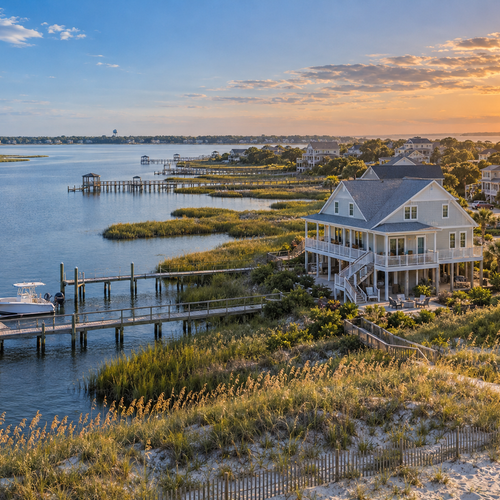
That is especially true in Beaufort, Morehead City, Atlantic Beach, Emerald Isle, Harkers Island, Down East, and throughout Carteret County. Coastal property can come with questions about flood insurance, septic systems, docks, HOAs, deferred maintenance, and expenses that an heir may never have dealt with before.
I have spent many years looking at real estate decisions through both a property and financial lens. With an inherited home, both matter.
Who Owns an Inherited Property in North Carolina?
One of the first things I would tell any family is not to assume the executor automatically owns the house or has the sole authority to sell it.
Under North Carolina law governing title to a decedent's real property, real property generally vests in the decedent's heirs at death. When property is devised under a valid probated will, title generally vests in the devisees and relates back to the date of death.
That distinction matters.
Depending on the estate, the people who inherited the property, the personal representative, or both may need to participate in the transaction.
Before anyone signs a listing agreement, I recommend having a North Carolina estate or closing attorney review the deed, will, estate file, and ownership structure. It is much better to know who has authority to act at the beginning than to discover a signature problem after you already have a buyer.
Can You Sell an Inherited House Before Probate Is Finished?
Sometimes, yes.
I would not tell a family that an inherited North Carolina house automatically has to sit unsold until the entire estate is closed. The answer depends on who holds title, what the will says, whether the estate has debts, and what authority the personal representative has.
North Carolina law addresses sales by heirs or devisees before the estate's final account is approved. In certain situations, the personal representative must join in the transaction. North Carolina's rules for sales of inherited real property during estate administration explain that process.
If real estate must be sold to pay estate debts or other claims, the personal representative may also seek authority through North Carolina's estate real-property sale process.
The practical answer is this: probate does not always have to be completely finished before a sale, but the legal structure of that sale needs to be right.
That is something I would want settled before we put the property under contract.
How Does the Estate Creditor Process Affect a Sale?
North Carolina estate administration includes a formal process for notifying creditors.
After letters are issued, the personal representative generally gives notice requiring claims to be submitted by a deadline that is at least three months after the first publication or posting. The law also addresses notice to known or reasonably ascertainable creditors. You can review the North Carolina notice-to-creditors requirements for the controlling provisions.
That does not automatically mean the house has to stay off the market throughout the process.
What matters is understanding where the estate stands and whether creditor issues could affect the transaction. I would rather have the estate attorney and closing attorney answer that question early than have everyone scrambling a few days before closing.
What If Multiple Heirs Own the Property?
This is where inherited real estate can become complicated quickly.
Several brothers, sisters, children, or other family members may all have an ownership interest, but they may not all want the same thing.
One person may want to sell immediately. Another may want to keep the house in the family. Someone else may think the home should be renovated first.
Before arguing over an asking price, I would get everyone working from the same facts.
What is the property worth? What does it cost to carry each month? What repairs are needed? What would each person likely receive from a sale? Those numbers often make the conversation more productive.
If one heir wants to keep the house, a buyout may be an option. An independent appraisal or other credible valuation can give the family a neutral starting point.
When co-owners cannot agree, North Carolina law provides a legal process for partition. The North Carolina partition laws for jointly owned real estate explain those options.
Court action can add time, expense, and stress. If a reasonable family agreement is possible, I would explore that first with the appropriate legal guidance.
Determine the Inherited Property's Market Value
The value of an inherited property affects much more than the eventual list price.
You may need a reliable value to compare selling with a family buyout, decide whether repairs make financial sense, estimate proceeds, or help document the property's value for tax purposes.
Here on the Crystal Coast, I have learned that two houses with similar square footage can have very different values.
Water access, flood exposure, views, elevation, parking, lot characteristics, condition, insurance considerations, dockage, and community restrictions can all matter. A dock that gives a buyer dependable boating access may be viewed very differently from one with limited water depth.
The same is true with oceanfront, soundfront, creekfront, and interior properties.
If the family decides to sell, our guide to preparing and selling a coastal North Carolina home goes further into pricing, preparation, marketing, offers, and closing.
Understand the Tax Basis of Inherited Property
This is one part of the process where my accounting background makes me especially cautious about assumptions.
The property's tax basis can have a major effect on the financial result of a sale.
The IRS states that the basis of inherited property is generally its fair market value on the date of the decedent's death. Different rules can apply in certain circumstances, including when an alternate valuation is properly elected. The IRS guidance on determining the basis of inherited property provides the general rule.
That can make a substantial difference when a Crystal Coast property has been in the family for decades.
Suppose a parent or grandparent bought a waterfront home many years ago for a fraction of what it was worth when they died. The heir generally does not simply start with that old purchase price when calculating taxable gain.
If the property later sells for more than its adjusted inherited basis, taxable gain may result. Improvements, selling expenses, estate circumstances, and other factors can affect the calculation.
This is exactly where I recommend bringing in a CPA or tax attorney. A REALTOR® can help you understand market value and likely selling costs, but tax advice belongs with the tax professional.
Should You Get a Date-of-Death Appraisal?
A separate appraisal is not required for every estate, but good documentation of the property's fair market value around the date of death can be very useful.
That is particularly true with unusual Crystal Coast properties.
An oceanfront home in Emerald Isle, a historic property in Beaufort, a soundfront house with deep-water access, or a large rural parcel Down East may not be easy to value accurately years after the fact.
Ask the estate's attorney or CPA what documentation they want before assuming that a current market analysis will serve the same purpose.
Review the Deed, Liens, Taxes, and Property Records
I would also spend some time understanding what is attached to the property on paper.
An heir may have visited the house for years and still know very little about its recorded history.
Gather the deed, mortgage information, surveys, plats, recorded easements, powers of attorney, and other documents you can find. A closing attorney should conduct the formal title examination required for a sale.
The Carteret County Register of Deeds maintains the county's land and real estate records, including recorded documents affecting ownership and real estate transactions.
You also want to identify unpaid property taxes, mortgages, judgments, liens, or other claims that could affect the estate's net proceeds.
Again, I prefer finding those things before we have a buyer rather than after.
Check the Condition of the Inherited Home
One challenge with an inherited house is that you may be responsible for selling a property you never personally maintained.
Maybe your parents used it only in the summer. Maybe it was rented. Maybe another family member handled repairs, and nobody knows where the records are.
Start by gathering what you can.
Look for information on the roof, HVAC system, windows, plumbing, electrical work, decks, foundation or pilings, termite treatment, storm repairs, and major renovations.
You do not need to turn yourself into a home inspector. The goal is to find the questions before a buyer finds them for you.
On the coast, I pay particular attention to maintenance because salt air, moisture, storms, and long periods of vacancy can expose weaknesses that are easy to miss during a quick walk-through.
Once you know what you are dealing with, you can make a more informed decision about repairs or an as-is sale.
Review Flood and Insurance Information
For a Crystal Coast property, I would gather the insurance records early.
The North Carolina Department of Insurance explains that a standard homeowners insurance policy does not cover flood damage. You can review the North Carolina flood insurance guidance for more information.
Look for existing flood policies, homeowners insurance records, and any Elevation Certificate in the property file.
Do not assume that what the previous owner paid for insurance tells you what the next owner will pay. Buyers should get property-specific insurance information before making financial assumptions.
Our guide to understanding Crystal Coast flood zones and Elevation Certificates explains those questions in greater detail.
Verify Septic or Sewer Records
If the property is not connected to a public sewer, find out what you can about the septic system.
This matters in several parts of Carteret County, particularly in communities where onsite wastewater systems are common.
Try to locate the original permit, maintenance records, pumping records, and information about the approved system. Carteret County's onsite wastewater resources are a good place to start.
I would not assume that an extra sleeping room, later addition, or proposed renovation automatically matches what the septic system was approved to serve.
If there is a question, verify it with the appropriate county officials before promising anything to a buyer.
Check Dock and Water-Access Records
If I am evaluating an inherited waterfront property, I want to know exactly what comes with the water access.
Is there a private dock? A boat lift? Deeded community access? How deep is the water? What condition are the improvements in?
Those details can make a meaningful difference to the buyer who wants to use the property for boating.
CAMA generally regulates development in designated coastal Areas of Environmental Concern. North Carolina law also provides specific rules for certain qualifying dock, pier, and walkway repairs. The North Carolina CAMA statute covering docks, piers, and coastal development provides the legal framework.
My advice to an heir is not to become a CAMA expert.
Gather the permits, surveys, and repair records you can find. Then verify anything uncertain before advertising what a buyer will be able to build, rebuild, or modify.
Our guide to what Crystal Coast property owners should know about CAMA dock permits goes deeper into those questions.
Review HOA or Condominium Obligations
If the inherited property is in an HOA or condominium, the monthly dues are only part of the story.
I would like to know what those dues actually cover.
Review the budget, association insurance, current assessments, proposed assessments, meeting information, and rules affecting rentals, pets, parking, renovations, or waterfront amenities.
On the Crystal Coast, I would also pay attention to who is responsible for private roads, beach access, docks, bulkheads, pools, and other common improvements.
The better question is not just, “What are the dues?”
It is, “What could the owner still be responsible for paying?”
Our guide to what a coastal HOA covers and what remains the owner's responsibility explains that distinction.
Understand Disclosure Requirements for an Inherited Home
Inherited-property disclosure requirements deserve careful attention.
Do not assume that every inherited home is automatically exempt from the same disclosure rules that apply in a conventional sale.
North Carolina's Residential Property Disclosure Act contains exemptions for certain transactions, including specified court-ordered transfers and some transfers made by a fiduciary while administering a decedent's estate. The North Carolina residential property disclosure exemptions identify those situations.
Whether an exemption applies depends on how the property is owned and how the transaction is structured.
This is another area where I would have the attorney and listing broker confirm the correct paperwork instead of making assumptions.
Should You Sell, Keep, or Rent the Inherited Property?
Once you know the legal situation, property condition, value, and costs, you can finally get to the decision most families care about.
Do we sell it, keep it, or rent it?
There is no single right answer.
Selling may make sense if the heirs want liquidity, live far away, disagree over long-term use, or simply do not want another property to maintain.
Keeping it can make sense if someone genuinely wants the house and can comfortably handle the taxes, insurance, maintenance, utilities, HOA expenses, and future repairs.
Renting may generate income, but rental income should never be considered without rental expenses.
You have to account for management, maintenance, insurance, repairs, association rules, local requirements, vacancy, and the wear that comes with rental use.
I have always preferred looking at net numbers rather than impressive gross numbers.
Before deciding to hold the property, our guide can help you calculate the full cost of owning a Crystal Coast home.
Should You Sell the Inherited Home As-Is or Make Repairs?
I hear this question often with properties that need some work.
My answer is usually: run the numbers first.
You do not have to renovate an inherited house simply because you are preparing to sell it.
For one property, spending money on a few well-chosen repairs may reduce buyer concerns and improve the result. For another, selling as-is may be the smarter decision.
Compare the likely increase in net proceeds with the cost of repairs, taxes, insurance, utilities, maintenance, and the additional months you may have to carry the property.
That distinction matters.
A $30,000 higher selling price is not a $30,000 improvement if it took nearly that much money and several extra months to get there.
My accounting background taught me to look beyond the headline number. The goal is not necessarily the highest selling price. The goal is the best reasonable net result for the family.
Build the Right Professional Team
Inherited coastal property can touch several areas of expertise, and I believe people are better served when each professional stays in his or her lane.
An estate attorney can advise you about probate, legal authority, and ownership. A closing attorney handles title and the transfer of the property. A CPA or tax attorney advises you on basis and tax consequences.
Depending on the property, you may also need an insurance agent, surveyor, contractor, environmental-health official, or coastal permitting professional.
My role as a REALTOR® is to help you understand how all of those property facts affect market value, preparation, buyer expectations, negotiations, and the eventual sale.
At Star Team Real Estate, my CCIM designation and professional accounting background support the work we do with Crystal Coast and Carteret County property owners who need to evaluate both the real estate and financial sides of a sale.
I was a regular visitor to Carteret County for more than 30 years before Lugean and I moved permanently to Beaufort in 2000. That has allowed me to see this area from two perspectives: first as someone coming here from outside the area, and later as someone who lives here and understands the coast as home.
That perspective matters when a family has inherited property here but lives somewhere else.
What Should You Do First After Inheriting Property?
If you have just inherited a Crystal Coast property, I would start with five questions:
- Who legally owns the property, and who needs to participate in a sale?
- What is the property realistically worth today?
- What debts, carrying costs, repairs, or property issues need attention?
- What are the tax consequences of selling?
- Do the heirs want to sell, keep, rent, or arrange a buyout?
You do not need to answer everything immediately.
You do need to work through the questions in the right order.
Start with the estate and title. Then gather the property records. Establish market value. Understand the carrying costs. Finally, compare the options using numbers that reflect the property you actually inherited.
That approach tends to produce better decisions than starting with what someone thinks the house “ought to be worth.”
Frequently Asked Questions
Can I sell my parent's house in North Carolina before probate is finished?
Yes, an inherited house in North Carolina may sometimes be sold before probate is completely finished. Whether you can close depends on who owns the property, the personal representative's authority, estate creditor issues, and who must sign the deed. A North Carolina estate or closing attorney should confirm the correct sale structure before you list the property.
Does the executor automatically have the right to sell an inherited house?
No. In North Carolina, an executor does not automatically have sole authority to sell inherited real estate. Real property generally passes to the heirs or to devisees named in a valid will, although the executor or administrator may need to participate depending on the will, estate debts, and how the sale is structured.
What if my siblings and I cannot agree about selling the inherited property?
If multiple heirs cannot agree about selling an inherited property, common options include negotiating a sale, having one heir buy out the others, or pursuing a partition proceeding. I would first establish the property's market value, ownership interests, carrying costs, and estimated net proceeds so everyone is working from the same facts. A North Carolina attorney can explain the legal options if an agreement cannot be reached.
Do I need an appraisal for an inherited beach house?
A separate appraisal is not required for every inherited property, but documenting the home's fair market value around the date of death can be important for tax basis and family decisions. This is particularly useful for unique Crystal Coast properties such as oceanfront, soundfront, historic, or deep-water homes. Ask the estate's CPA or attorney what type of valuation documentation is appropriate.
Can I sell an inherited Crystal Coast home as-is?
Yes. An inherited Crystal Coast home can be sold as-is when making repairs would not produce enough additional net proceeds to justify the cost, time, and carrying expenses. Before deciding, compare the expected as-is proceeds with the likely proceeds after repairs and confirm the disclosure requirements that apply to the sale.
Should I keep, rent, or sell an inherited coastal property?
The best choice depends on the property's market value, carrying costs, needed repairs, realistic net rental income, tax considerations, and the goals of the heirs. Selling may fit a family that wants liquidity, while keeping or renting may make sense when someone wants the property and can afford its ongoing costs. I recommend comparing the options using realistic net numbers rather than the highest possible sale price or gross rental income.
Get Help Selling an Inherited Crystal Coast Property
An inherited property can feel complicated because legal, financial, family, and real estate questions arrive at the same time.
Breaking the decision into smaller pieces makes it much more manageable.
If you inherited a house in Beaufort, Morehead City, Atlantic Beach, Emerald Isle, Harkers Island, Down East, or elsewhere in Carteret County, Star Team Real Estate can help you understand the real estate side of the decision, evaluate the property's position in the market, and build a practical selling strategy when the family is ready.
If you would like to talk through the property and the numbers, call Star Team Real Estate at (252) 727-5656.
Disclaimer: This article is for general educational and real estate information only. It is not legal, tax, accounting, insurance, surveying, engineering, or permitting advice. Estate and property circumstances differ, so consult the appropriate North Carolina attorney, CPA, insurance professional, surveyor, or government agency for advice about a specific property.
Check out this article next