

By Lugean Hogan, REALTOR®/BROKER, ABR, CLHMS
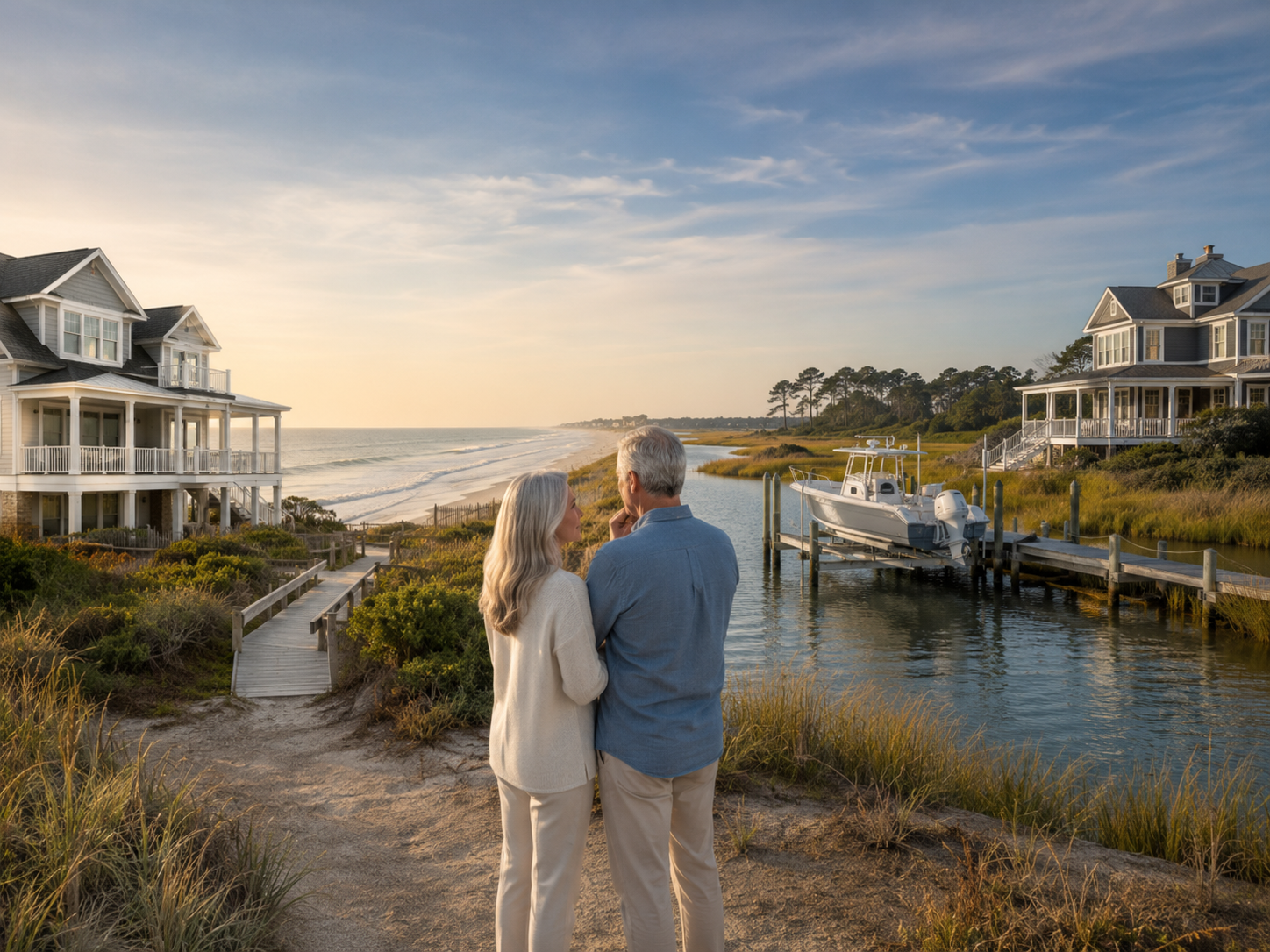
Oceanfront is usually the better fit when direct beach access, Atlantic views, and the sound of the surf are central to your plans. Soundfront often works better when boating, paddling, fishing, and private dock access will shape your daily life.
Neither option is automatically safer, more affordable, or a better investment. The right choice depends on the specific property, including its elevation, construction, access rights, shoreline condition, insurance costs, and how you intend to use it.
After living in Carteret County for more than 40 years, I have watched many buyers change their minds after experiencing both settings. The goal is not to choose the most impressive waterfront label. It is to choose the water you will actually use.
Soundfront vs Oceanfront at a Glance
| Factor | Oceanfront | Soundfront |
|---|---|---|
| Primary appeal | Direct beach access and Atlantic views | Calmer water and boating access |
| Best daily activities | Swimming, beach walks, surfing, and surf fishing | Boating, kayaking, fishing, crabbing, and dock time |
| Private dock potential | Rare on the Atlantic side | Possible, but depth, permits, and access must be verified |
| Main exposure concerns | Waves, erosion, salt spray, wind, and storm surge | Storm surge, tidal flooding, wind, and marine-structure damage |
| Best fit | Buyers who want the beach at their door | Buyers who want usable water at their dock |
The simplest question is this:
Would you rather step onto the beach or step into your boat?
Your answer will usually point you toward the right waterfront lifestyle.
What Soundfront and Oceanfront Mean
An oceanfront home directly faces the Atlantic Ocean. On the Crystal Coast, oceanfront properties are found along Bogue Banks in Atlantic Beach, Pine Knoll Shores, Indian Beach, Salter Path, and Emerald Isle.
Farther south, oceanfront homes are found in communities such as Wrightsville Beach, Carolina Beach, Kure Beach, Topsail Beach, North Topsail Beach, Surf City, Oak Island, and Bald Head Island.
A soundfront home faces a sound, estuary, tidal river, creek, or protected coastal waterway instead of the open Atlantic. Local examples include Bogue Sound behind Bogue Banks, Core Sound near Harkers Island and Down East, Masonboro Sound near Wrightsville Beach, and Topsail Sound behind Topsail Island.
The word “soundfront” does not guarantee deep water or a private dock. One home may offer dependable access to a maintained channel. Another may have marsh frontage, shallow water, seasonal limitations, or no legal right to build a dock.
Oceanfront access also varies. A property may have a private walkway, shared crossover, deeded easement, nearby public access, or restrictions on how the dunes may be crossed.
Buyers comparing other coastal settings can review how Coastal North Carolina property types differ, including canalfront, marshfront, deep-water, water-view, and beach-access homes.
Star Team Real Estate combines Lugean Hogan’s Certified Luxury Home Marketing Specialist designation, more than 40 years in Carteret County, and over 10 years of real estate service with her earlier marine sales and service experience at Jones Brothers Marine. That local and marine background is especially useful when evaluating Coastal North Carolina waterfront homes, where the view, dock, water depth, and navigation route may tell very different stories.
Oceanfront vs Soundfront Lifestyle Differences
Beach and Water Activities
Oceanfront living revolves around the beach. A normal day may include a sunrise walk, swimming, shelling, surfing, surf fishing, or listening to the waves from the porch.
The trade-offs may include stronger wind, blowing sand, salt spray, and greater wear on exterior surfaces. Outdoor areas may also be less comfortable during rough weather.
Soundfront living centers on protected water. A normal day may include launching a kayak, checking crab pots, fishing from the dock, lowering a boat from the lift, or watching the evening light across the sound.
Many soundfront homes offer attractive sunset views, but the direction of the lot matters. Buyers should confirm the property’s orientation rather than assume every soundfront home faces the sunset.
If you expect to spend most of your time on the sand, the oceanfront has the advantage. If you expect to spend it on a boat, dock, paddleboard, or protected shoreline, soundfront may be the better fit.
Privacy and Seasonal Activity
Oceanfront streets in vacation-oriented communities may experience more summer traffic, neighboring short-term rentals, beach activity, and frequent guest turnover.
Soundfront areas can feel quieter or more residential, but that is not guaranteed. Neighborhood character may change from one street or subdivision to the next.
Visit a property at different times of day. When possible, return on a weekend or during a busier season rather than judging the setting from one quiet weekday showing.
Full-Time, Second-Home, and Rental Use
Oceanfront homes often have an easy-to-understand vacation appeal. Guests immediately recognize the value of direct beach access and an Atlantic view.
A soundfront home with a functional dock may appeal strongly to boaters, anglers, paddlers, and families who prefer calmer water. However, a water view without usable access may not produce the same appeal.
Before buying a vacation property, verify:
- Local short-term rental rules
- HOA restrictions
- Parking and occupancy limits
- Septic capacity, where applicable
- Beach, dock, and boat access
- Boat and trailer storage rules
- Property-management costs
- Insurance requirements
- Maintenance response times
Do not assume that either waterfront type will produce a particular rental return. Evaluate the property using current, address-specific income and expense information.
Boating and Dock Access
A true oceanfront lot generally does not provide private dockage into the Atlantic. Boat owners typically rely on a marina, public ramp, dry-stack facility, trailer, or separate sound-side slip.
That arrangement may work well, but it is different from walking outside and lowering your boat from a private lift.
Soundfront property may provide a true dock-to-water lifestyle. However, waterfront frontage alone does not guarantee dependable boating access.
Before making an offer, verify:
- Water depth at normal low tide
- Tidal and seasonal depth changes
- Shoaling and bottom conditions
- Distance to a maintained channel
- Fixed bridges and vertical clearance
- Inlet access
- Dock permits and legal access rights
- Dock, lift, and piling condition
- Boat-lift capacity
- Exposure to wind, current, and wakes
A wide water view is not the same as reliable navigation. Buyers can use this local guide to understand how to evaluate deep-water access in Morehead City, but water depth and navigation must still be verified for the individual property and boat.
Before planning a dock, lift, bulkhead, or shoreline project, review the current North Carolina coastal permit requirements. The North Carolina Division of Coastal Management provides live information about permit types, applications, local permit officers, and permit records.
Flood Risk, Insurance, and Storm Exposure
Do not assume every soundfront home is safer or less expensive to insure than every oceanfront home.
Oceanfront properties may face direct wave action, beach erosion, storm surge, wind-driven sand, and heavy salt exposure. Soundfront properties may face wind, storm surge, tidal flooding, shoreline damage, and damage to docks or lifts.
The National Hurricane Center’s storm-surge guidance explains that storm surge can travel through rivers and canals and reach inland areas. It also identifies North Carolina’s barrier islands, inlets, sounds, bays, and rivers as local features that can influence how surge moves and where water rises.
Use the FEMA Flood Map Service Center to review the mapped flood hazard for a specific address. A flood map is an important starting point, but it should not replace an elevation review, insurance quotes, property inspection, and professional evaluation.
Flood coverage is usually separate from standard homeowners insurance. FEMA’s National Flood Insurance Program advises that most homeowners and renters policies do not cover flood damage and that premiums are specific to the property’s location, construction, and replacement cost. Review what flood insurance covers and excludes before comparing policies.
Before making an offer, ask the same coastal insurance professional to quote each property using comparable coverage. Review:
- Homeowners insurance
- Flood insurance
- Wind and hail coverage
- Named-storm or hurricane deductibles
- Replacement-cost limits
- Water-backup coverage
- Coverage for contents
- Coverage for detached structures
- Dock and lift exclusions
- Temporary living expenses
- Prior claims information, when available
Elevation, foundation design, roof condition, opening protection, construction quality, and documented improvements may matter more than the basic oceanfront-or-soundfront label.
Request any available elevation certificate, permits, insurance documents, engineering reports, and repair history. Have your own insurance, inspection, legal, and construction professionals confirm what applies to the property.
Buyers planning to live on the coast should also understand how to prepare for hurricane season on the Crystal Coast.
Maintenance and Ownership Costs
Both waterfront types require more maintenance than many inland homes. The difference is where that maintenance is usually concentrated.
Common Oceanfront Maintenance
Oceanfront buyers should inspect and budget for possible work involving:
- Exterior coatings and paint
- Corroded fasteners and hardware
- Windows and exterior doors
- Decks and railings
- Roofing
- HVAC corrosion
- Sand removal
- Storm shutters or opening protection
- Dune and walkway access
- Erosion-related evaluations
Salt, wind, and sand can shorten the useful life of exposed materials. The condition and construction quality of the individual home are more important than its age alone.
Common Soundfront Maintenance
Soundfront buyers may need to plan for:
- Dock boards and pilings
- Boat-lift service or replacement
- Bulkheads or seawalls
- Marine electrical systems
- Shoreline stabilization
- Wake-related wear
- Debris removal after storms
- Permitting and engineering
- Limited depth or shoaling
The expensive surprise is often not the feature buyers notice during a showing. It is the hidden structure that has reached the end of its useful life or cannot be repaired as easily as expected.
Review the hidden costs of owning a Crystal Coast waterfront home before deciding how much money to reserve for maintenance.
Oceanfront vs Soundfront Resale Value
Oceanfront homes offer benefits that future buyers can quickly understand: Atlantic views and direct beach access.
Soundfront value is strongest when the property offers equally clear and documented benefits. These may include a permitted dock, usable water depth, a protected basin, an appropriate boat lift, or a simple route to a maintained channel.
Avoid assuming that one waterfront category always appreciates faster or holds its value better. Resale depends on:
- Town and neighborhood
- Lot position
- Beach or dock access
- Water depth
- Home condition
- Insurance burden
- Rental restrictions
- Shoreline stability
- Supply of comparable homes
- Market conditions at the time of sale
Compare recent sales with similar frontage, access, condition, and practical use. A soundfront property with dependable deep-water access should not be compared with shallow marsh frontage simply because both listings use the word “waterfront.”
Legal access also affects value. Buyers should understand how to compare direct, deeded, shared, and public beach access by reviewing deeds, surveys, plats, easements, and HOA documents.
Which Waterfront Lifestyle Fits You?
Oceanfront May Fit You Better If
- Direct beach access is your main priority.
- You expect to walk, swim, surf, or fish from the beach often.
- Atlantic views and the sound of the waves matter more than dock access.
- Your boat can remain at a marina, dry stack, public ramp, or separate slip.
- You are prepared for direct wind, salt, sand, and erosion exposure.
- Address-specific insurance and maintenance costs fit your budget.
- You want a home with immediate beach appeal.
Soundfront May Fit You Better If
- A boat, kayak, paddleboard, or dock will be part of normal life.
- You prefer calmer water and a quieter shoreline experience.
- You want to fish, crab, or relax beside the water.
- You are willing to verify depth, dock rights, permits, and channel access.
- You would rather drive to the beach than transport your boat.
- The property offers the right balance of price, carrying cost, and daily use.
- You want a more boating-oriented waterfront setting.
Waterfront Due-Diligence Checklist
Before choosing either type of waterfront property, confirm the following.
Legal Rights and Access
- Review the deed, survey, plat, easements, and HOA documents.
- Confirm whether beach, dock, and walkway access is private, shared, deeded, or public.
- Verify that existing waterfront structures were properly permitted.
- Determine whether all access rights transfer with the property.
Flood and Insurance
- Obtain address-specific homeowners, flood, wind, and hail quotes.
- Review deductibles, exclusions, and coverage limits.
- Check the FEMA flood map and any available elevation certificate.
- Request prior claims and repair information when available.
Structure and Waterfront Improvements
- Inspect the roof, windows, doors, siding, decks, railings, and HVAC equipment.
- Evaluate foundations, pilings, crawlspaces, and lower-level enclosures.
- Inspect docks, lifts, bulkheads, seawalls, and marine electrical systems.
- Build a maintenance reserve based on inspection findings and remaining useful life.
Boating and Beach Use
- Confirm low-tide depth, channel access, bridge clearance, lift capacity, and dock condition.
- Verify the route and travel time to the boating areas you expect to use.
- Confirm whether beach access is direct, shared, deeded, or public.
- Review dune-crossing, setback, repair, and rebuilding restrictions.
Financial Comparison
- Compare sales with similar frontage and access.
- Estimate taxes, insurance, utilities, maintenance, and reserves.
- Separate the value of the house from the value of the waterfront improvements.
- Consider more than one financing and down-payment scenario.
A careful purchase process can keep emotion from outrunning due diligence. Review how to buy a home on the North Carolina coast without costly surprises before making an offer.
You can also estimate your base North Carolina mortgage payment. Add waterfront insurance, maintenance reserves, dock or shoreline costs, and applicable HOA dues separately.
Where to Compare Coastal North Carolina Waterfront Homes
On the Crystal Coast, buyers can compare Atlantic-facing homes along Bogue Banks with soundfront and boating-oriented properties around Bogue Sound, Morehead City, Beaufort, Cape Carteret, Harkers Island, and Swansboro.
Start by reviewing Crystal Coast waterfront homes for sale to see how frontage, access, location, and property type vary among communities.
In the Wilmington region, buyers can compare Atlantic-facing homes in Wrightsville Beach, Carolina Beach, Kure Beach, and Topsail Island with properties near Masonboro Sound, Topsail Sound, the Intracoastal Waterway, tidal creeks, canals, and the Cape Fear River.
Use the guide to compare Wilmington-area coastal communities before narrowing your search.
Public listings do not always make water depth, legal access, shoreline restrictions, or dock condition easy to compare. A custom Coastal North Carolina waterfront home search can help narrow the market according to the features that matter to you.
Frequently Asked Questions
Is Soundfront Safer Than Oceanfront in Coastal North Carolina?
Soundfront is not automatically safer than oceanfront in Coastal North Carolina. Oceanfront homes face direct waves, erosion, wind, and storm surge, while soundfront homes may face tidal flooding, storm surge, shoreline damage, and wind. The safer choice depends on the property’s elevation, construction, flood zone, foundation, and location.
Is Soundfront Usually Less Expensive to Insure Than Oceanfront?
Soundfront homes may cost less to insure than comparable oceanfront homes, but that is not guaranteed. Insurance premiums depend on the exact address, elevation, construction, replacement cost, coverage limits, and deductibles. Buyers should obtain property-specific flood, wind, and homeowners insurance quotes before making an offer.
Can I Keep a Boat at Every Soundfront Home?
No, not every soundfront home supports private boat access. Some properties have permitted docks, boat lifts, and dependable water depth, while others have shallow water, marsh frontage, tidal limitations, or no legal dock rights. Buyers should verify low-tide depth, dock permits, lift capacity, bridge clearance, and access to a maintained channel.
Which Is Better for a Vacation Rental: Oceanfront or Soundfront?
Oceanfront is often easier to market to vacationers who want direct beach access and Atlantic views. Soundfront homes may perform well when they offer a usable dock, boating access, fishing, kayaking, or calmer water. The better investment depends on local rental rules, property expenses, amenities, management costs, and current demand.
Which Holds Its Value Better: Oceanfront or Soundfront?
Neither oceanfront nor soundfront always holds its value better. Oceanfront value is often tied to direct beach access and unobstructed Atlantic views, while soundfront value depends heavily on usable water depth, dock rights, lift capacity, and navigation access. Location, condition, insurance costs, shoreline stability, and buyer demand also affect resale value.
How Should I Compare Two Waterfront Homes?
Compare waterfront homes based on daily use, legal access, elevation, insurance, maintenance, water depth, beach or dock access, and resale appeal. Use the same insurance agent, inspector, attorney, and waterfront specialists to evaluate both properties under the same standards. This makes it easier to identify the home that offers the best long-term fit rather than simply the best view.
Choose the Water You Will Actually Use
The right waterfront home is not the one with the most impressive label. It is the one that supports the life you plan to live: the beach mornings, boat days, family visits, maintenance budget, and level of risk you can comfortably manage.
Be honest about what matters most. Do you want the surf at your door or your boat at the dock? Will you spend more time walking the beach or crossing the sound? Are you prepared to maintain the waterfront feature you value most?
Those questions matter more than whether the listing says oceanfront or soundfront.
Star Team Real Estate helps buyers compare waterfront homes across the Crystal Coast and Wilmington region through a practical, property-by-property approach. Our team can help you evaluate access, boating conditions, neighborhood fit, insurance questions, inspections, and long-term usability before you commit.
Learn more about our Coastal North Carolina home-buying guidance or call Star Team Real Estate at (252) 727-5656. We will help you compare your options honestly before you fall in love with the wrong shoreline.
Check out this article next