
Author: O.K. Hogan | REALTOR®/BROKER, CCIM, SFR
Buying on the North Carolina coast is one of the most exciting purchases you’ll ever make. It can also get expensive fast if you treat it like a standard home deal, because coastal homes come with “quiet costs” and rules that don’t show up in listing photos.
I’m O.K. Hogan, and I’ve viewed Carteret County from both sides, more than 30 years as a regular visitor, then as a full-time Beaufort resident since 2000. I’m also a retired professional accountant with an MBA and a CCIM, so I approach coastal buying with a simple goal: help you enjoy the lifestyle without getting blindsided by the numbers.
In this guide, I’ll walk you through a clear step-by-step plan that focuses on the two areas that trip up coastal buyers most: North Carolina due diligence (your contract window to investigate the property) and property-specific insurance realities, including how flood insurance pricing can vary by home under FEMA’s Risk Rating 2.0.
The 10-Step Coastal Buying Plan
- Choose a coastal area and a property type (oceanfront, soundfront, or mainland).
- Build a true monthly budget that includes insurance, HOA, and upkeep.
- Get pre-approved using those coastal assumptions.
- Hire a local agent and a closing attorney who understand coastal issues.
- Tour homes with “storm-day thinking,” not just sunny-day vibes.
- Make an offer with enough due diligence time to verify the big items.
- Run a coastal inspection plan (not just a standard inspection).
- Secure homeowners + wind/hail + flood coverage before deadlines.
- Review HOA/condo documents early and carefully.
- Close, then set up a maintenance and storm-readiness plan.
Pro Tip: Coastal purchases go best when you price the “hidden costs” first, before you fall in love with the view.
Step 1: Choose the Right Location Type
When someone says, “I want to buy on the coast,” my next question is always: What kind of coast? Because the costs and risks can change a lot by property type.
Oceanfront vs Soundfront vs Mainland: What Changes Most
| Property Type | What You Gain | What You Must Plan For |
|---|---|---|
| Oceanfront | Views + beach access | Higher exposure, more salt wear, insurance complexity |
| Sound/ICW/canal | Boating lifestyle + calmer water | Bulkheads, docks, shoreline condition, water access rules |
| Mainland near water | Easier access + often simpler insurance | Still need drainage + storm planning; some pockets flood |
Pro Tip: Decide on property type first, then narrow to neighborhoods. It keeps you from chasing homes that don’t match your budget reality.
If you’re actively browsing, you can start by comparing inventory in the Crystal Coast homes for sale versus the Wilmington-area communities.
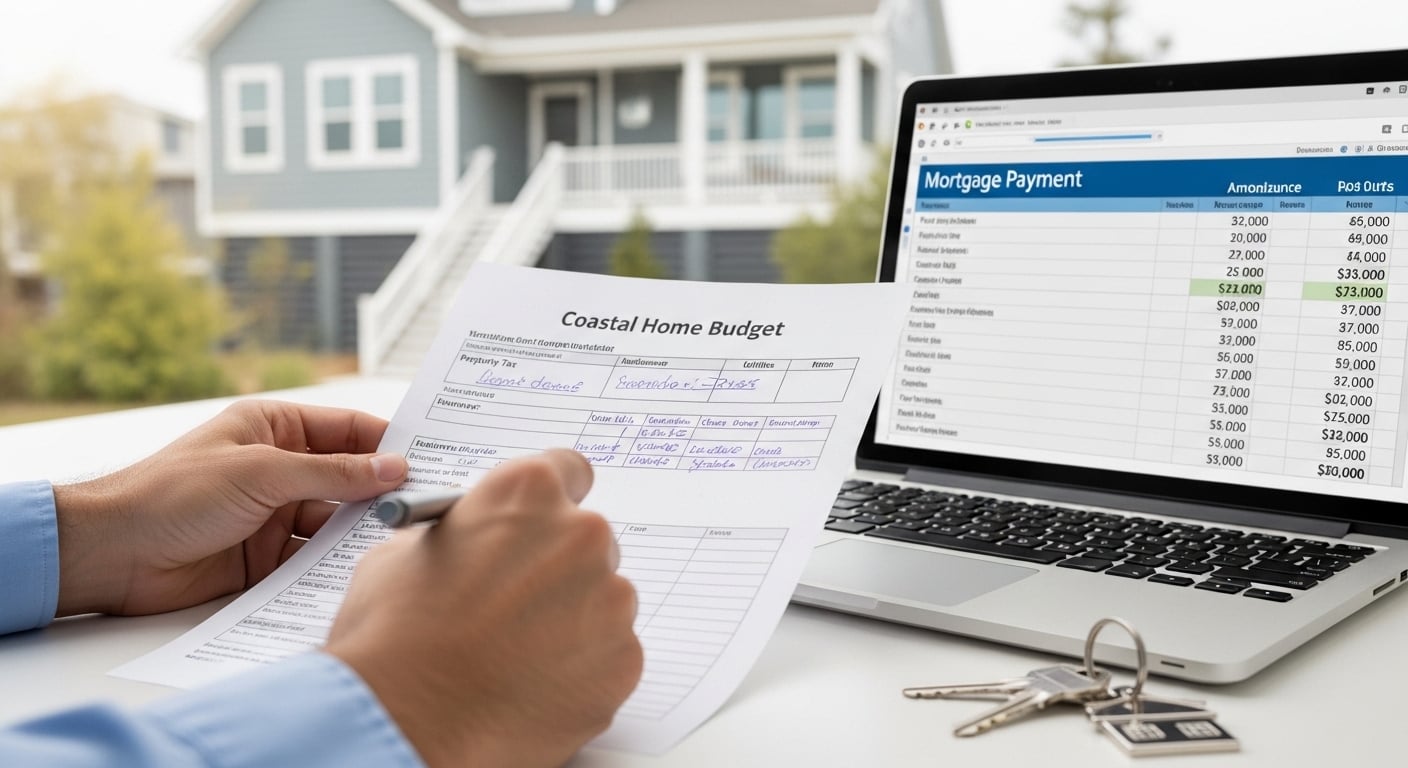
Step 2: Budget the Real Monthly Cost
Most buyer regret starts with a simple mistake: budgeting only the mortgage payment.
Coastal ownership usually includes more line items:
- Homeowners insurance
- Wind and hail coverage (sometimes separate)
- Flood insurance (NFIP or private)
- HOA dues (especially condos)
- A maintenance reserve (salt air is tough on homes)
Wind and Hail: Understand What’s Included
The NC Department of Insurance explains that windstorm and hail coverage may be excluded from a standard homeowners policy in some cases, and a separate policy can have a separate deductible.
“Latest” Homeowners Rate Trend You Should Plan For
North Carolina’s Department of Insurance announced a settlement where the average statewide base rate increases 7.5% on June 1, 2025 and 7.5% on June 1, 2026.
Pro Tip: Run your payment with realistic inputs first. Start with a simple North Carolina mortgage calculator, then add HOA + insurance quotes on top.
A Simple “Coastal Cost Stack” Example (For Planning)
This is not a promise; just a clean way to think.
| Monthly Item | What To Do |
|---|---|
| Mortgage + taxes | Use your lender’s estimate + county tax info |
| HOA (if any) | Confirm dues and ask about special assessments |
| Homeowners | Get a quote before your due diligence ends |
| Wind/hail | Confirm if separate; ask about storm deductibles |
| Flood | Price it early even if not required |
| Maintenance reserve | Set aside monthly for salt-air wear |
Pro Tip: If the deal only works when insurance is “probably fine,” it’s too fragile.
Step 3: Get Pre-Approved the Coastal Way
A generic pre-approval can miss coastal realities.
A coastal-ready pre-approval uses:
- The right occupancy type (primary vs second home vs rental)
- HOA dues (if applicable)
- Realistic insurance assumptions (homeowners + wind/hail + flood when needed)
Pro Tip: Tell your lender upfront if you’re looking at oceanfront, soundfront, or condos. It helps avoid last-minute surprises.
If you want a straightforward walkthrough of the overall process, this guide is helpful: How to Buy Like a Pro.
Step 4: NC Due Diligence (Don’t Skip This)
North Carolina’s due diligence system can feel different if you’re moving here from another state.
The NC Real Estate Commission describes due diligence as the buyer’s opportunity to investigate the property and the transaction within the timeframe set in the contract.
Pro Tip: On the coast, insurance quotes belong in due diligence, right alongside inspections.
Local Rules Vary (Important)
Town rules, HOA rules, insurance eligibility, and permitting can vary by location and property. Use your due diligence period to verify details with your closing attorney, insurer, and local officials.
Step 5: Tour Like a Coastal Buyer
When you tour a coastal home, you’re not just choosing a kitchen. You’re choosing a long-term ownership experience.
Look for:
- How water drains on the lot
- Roof age and roof shape
- Crawlspace moisture and ventilation
- Exterior wear (salt air accelerates corrosion)
- Road access during storms or high water
Pro Tip: Ask one question at every showing: “Does this home still make sense on a bad-weather day?”
Step 6: The Coastal Inspection Bundle
A standard inspection is a good start. Coastal buyers often need a more focused plan.
Consider:
- General home inspection
- Roof evaluation (especially if older)
- Moisture/crawlspace check
- Termite/WDI inspection
- Waterfront extras when needed (bulkhead, dock, shoreline)
Pro Tip: If the home is waterfront, don’t “assume” bulkheads and docks are fine. Verify conditions and costs while you still have leverage.
Step 7: Waterfront Rules, CAMA, and Permits
A lot of buyers say, “We’ll add a dock later,” or “We’ll stabilize the shoreline.”
On the North Carolina coast, those projects can involve the CAMA permitting system. NC DEQ explains that CAMA permits are divided into major, general, and minor permits, based on project size and impact.
Pro Tip: If your dream home requires a future project to become “perfect,” treat that project like an inspection item. Verify feasibility early.
Step 8: Flood Insurance Beyond the Flood Zone
Flood insurance is no longer just a “What flood zone is it?” question.
FEMA explains that Risk Rating 2.0 uses more property-level factors and provides examples showing how costs can vary for single-family homes.
Pro Tip: Even if your lender doesn’t require flood insurance, pricing it early can prevent a budget shock later.
Step 9: Named Storm Deductibles
This is one of the most misunderstood parts of coastal insurance.
The NAIC explains that a named storm deductible is usually a percentage of the home’s value, which can make your out-of-pocket cost larger than a standard deductible.
Pro Tip: Don’t ask, “What’s my deductible?” Ask, “What’s my deductible during a named storm?”
Step 10: HOA + Condo Document Review
HOAs and condos can be wonderful on the coast. They can also bring rules and costs you want to understand before closing.
During due diligence, review:
- Budget and reserves
- Special assessment history
- Rental rules
- Maintenance responsibilities
- HOA insurance vs what you must insure separately
Pro Tip: If documents are hard to get, unclear, or incomplete, treat that as important information; not a small inconvenience.
Offer Terms Checklist For Coastal Buyers
This is the “make the contract match reality” section.
Coastal offer terms to discuss with your agent and attorney:
- Due diligence length that fits inspections and insurance quoting
- Timing to receive and review HOA/condo documents
- Room for any specialized evaluations (roof, moisture, bulkhead/dock)
- Clear plan for verifying insurance coverage and deductibles
- A closing timeline that doesn’t compress critical steps
Pro Tip: Your contract should protect your ability to verify costs. That’s how you keep the deal safe.
FAQs
Do I need flood insurance if the home isn’t in a flood zone?
Not always, but flood risk and pricing can still matter. FEMA’s Risk Rating 2.0 uses more than flood zones, and costs can vary by property factors. Pricing it early is a smart budget check.
What is due diligence in North Carolina?
It’s the time period in the contract where the buyer investigates the property and the transaction. The NC Real Estate Commission explains it as a buyer’s opportunity to do further investigation before proceeding.
What is CAMA and when does it matter?
CAMA is North Carolina’s coastal management framework. If you plan certain coastal development activities, you may need a CAMA permit, major, general, or minor, depending on the project.
Why do named storm deductibles matter?
Because they’re often percentage-based. That can make out-of-pocket costs larger than buyers expect when a named storm deductible applies.
Next Steps
If you’re relocating, I recommend using a local-first plan: pick the right location type, budget the real monthly cost, and use due diligence to verify insurance, HOA rules, and coastal permitting realities.
When you’re ready, start with Star Team Real Estate and explore homes through our VIP home search. If you want to talk through neighborhoods, costs, and a safe game plan, call us at (252) 727-5656.
Check out this article next