
Author: O.K. Hogan | REALTOR®/BROKER, CCIM, SFR
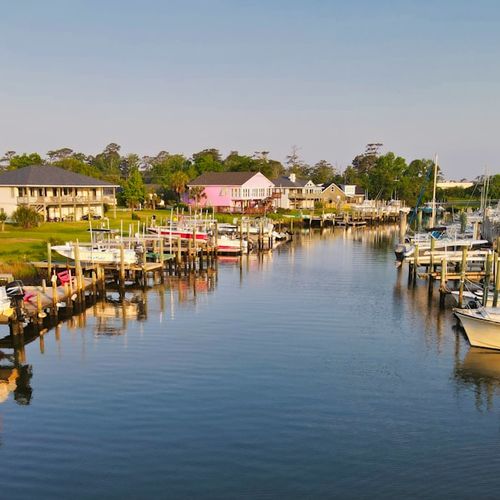
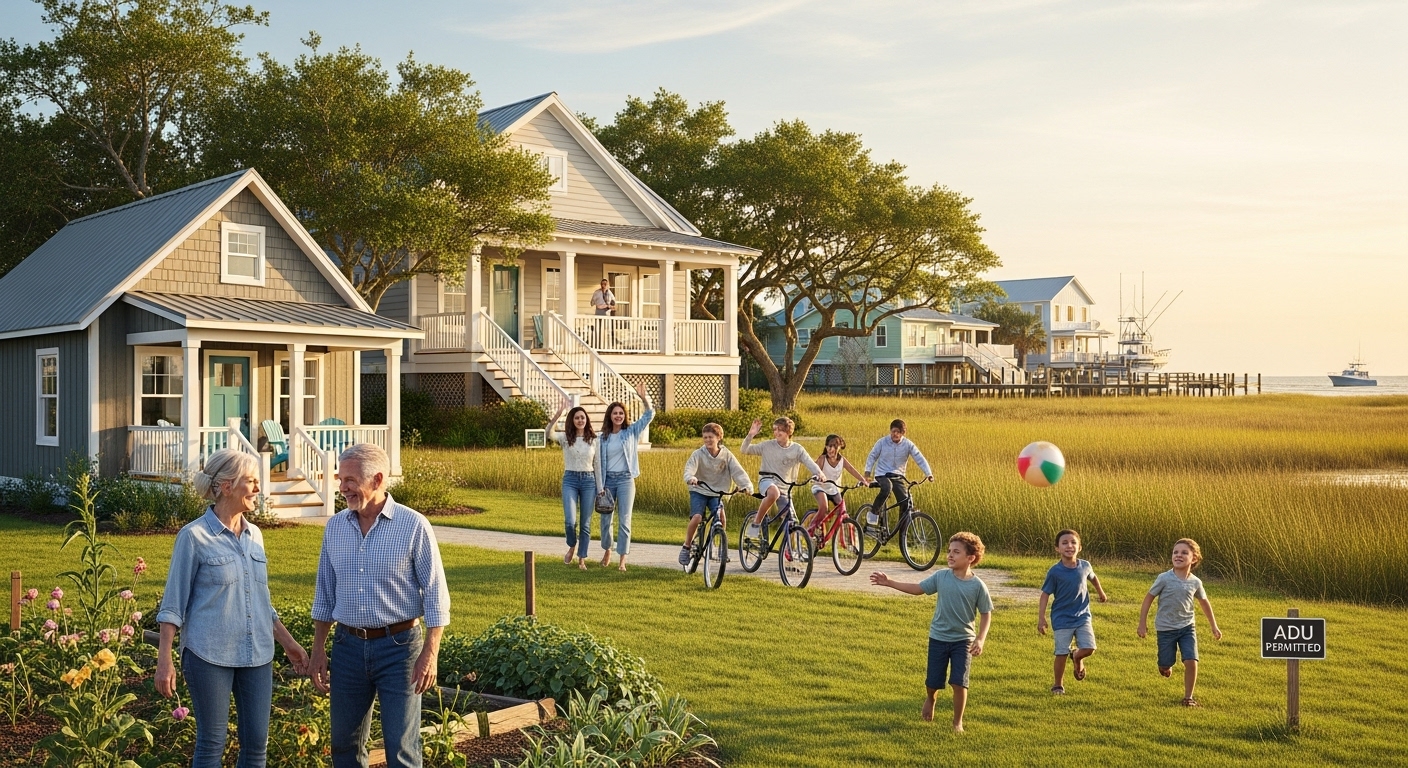
Imagine sitting on your porch in Beaufort at dusk, watching seafood boats glide by while your grandchildren run through the yard. You are safe, comfortable, and never far from the laughter of family. That is the promise of multigenerational communities along the NC coast. These communities allow seniors to maintain independence while gaining companionship, security, and financial peace of mind.
In this article, I will share why many seniors across North Carolina are choosing multigenerational communities, highlight real stories from Carteret County, explain design and financing considerations, and help you decide whether this option is right for your family.
Key Takeaways
- Multigenerational home purchases are at a record high. Seventeen percent of all recent buyers purchased a multigenerational home, with cost savings (36 percent) and caring for aging parents (25 percent) as leading reasons.
- North Carolina’s senior population is rising quickly. By 2040, the state will have about 2.7 million residents aged 65 or older, and by 2031 seniors will outnumber children.
- Loneliness is a major health risk. The U.S. Surgeon General’s Advisory on Social Connection reports that lack of social connection can raise premature death risk as much as smoking up to 15 cigarettes a day.
- Assisted living costs continue to rise. The 2024 CareScout Cost of Care Survey shows the median annual cost of assisted living in North Carolina is about $76,245, or roughly $6,350 per month.
- For alternatives beyond multigenerational living, review our Senior Citizen Housing Alternatives on the NC Coast.
What Multigenerational Communities Mean Today
Multigenerational communities bring together three or more generations under one roof or within one property. In North Carolina, this often takes the shape of:
- In-law suites attached to a main home.
- Accessory dwelling units (ADUs), such as backyard cottages or converted garages.
- Separate floors with private entrances.
When I first moved to Beaufort, I was amazed at how families were adapting coastal homes for aging parents. One family transformed a detached garage into a cozy one-bedroom apartment for Grandma. She had her own porch and kitchenette but was steps away from family dinners.
This balance of independence and togetherness is what makes multigenerational communities so appealing.
Why Multigenerational Living is Growing
A National Trend
The NAR Generational Trends Report confirms that 17 percent of buyers in 2024 chose a multigenerational home. Top reasons were cost savings (36 percent), caring for aging parents (25 percent), and adult children returning home (21 percent).
North Carolina’s Aging Population
Currently, about 20 percent of North Carolinians are age 65 or older. According to OSBM Aging Projections, by 2040, the senior population is expected to reach 2.7 million, and by 2031 seniors will outnumber children statewide.
Families are responding by looking for housing solutions that keep loved ones close, safe, and supported.
Benefits Seniors Experience
Emotional and Social Well-Being
The Surgeon General’s Advisory warns that social disconnection increases risks of anxiety, depression, dementia, and premature death. Multigenerational living reduces those risks by keeping seniors engaged with loved ones.
I remember one client in Morehead City who moved into her daughter’s in-law suite. She told me, “I thought I was losing independence. What I gained was a sense of belonging I had been missing.”
Practical Care and Safety
From medication reminders to hurricane preparedness, multigenerational homes ensure seniors have support when it matters most. Families can coordinate transportation, medical appointments, and storm plans together, so no one is left to manage alone.
Financial Security
The 2024 CareScout Cost of Care Survey reports that assisted living in North Carolina averages $6,350 per month. By contrast, a one-time investment in an in-law suite or ADU, typically $90,000 to $150,000 depending on specifications and market, can pay off over time. Shared expenses for groceries, utilities, and home maintenance also ease the financial burden.
Housing Policies in North Carolina
North Carolina cities are making it easier to build or adapt homes for multigenerational living:
- Raleigh permits ADUs under its Unified Development Ordinance.
- Wilmington raised its maximum ADU size in 2024 to 1,200 square feet or 50 percent of the principal dwelling, whichever is less. See City ordinance updates.
- Charlotte launched the Queen City ADU Program in September 2025, offering forgivable, interest-free loans up to $80,000.
Regulations vary by city and county, so homeowners should confirm local zoning and permitting requirements.
Designing Homes for Seniors in Multigenerational Communities
Helpful design features include:
- No-step entrances and wide doorways.
- First-floor suites with private baths.
- Curbless showers and grab bars.
- Bright, even lighting and lever handles.
- Soundproofing for privacy.
- Separate entrances for suites or ADUs.
In Emerald Isle, I toured a property where a detached suite featured a kitchenette, porch, and garden view. The grandmother said it felt like her own cottage, yet she could be at her daughter’s dinner table in minutes.
A Carteret County Case Study
A Morehead City family built a 700-square-foot cottage behind their daughter’s home for about $130,000. Compared with the median cost of assisted living at $76,245 per year, the investment paid for itself in less than two years.
Now, the grandparents enjoy daily visits with grandchildren, and their daughter has peace of mind knowing her parents are safe.
Alternatives for Seniors Who Prefer Independence
Not every senior wants to join a multigenerational community. Other options include:
- Independent Living Communities with social amenities.
- 55+ Active Adult Communities.
- Assisted Living Facilities for daily support, with costs averaging $6,350 per month in North Carolina.
- Continuing Care Retirement Communities.
See our Senior Citizen Housing Alternatives on the NC Coast for more options.
Conclusion: Finding the Right Fit
Multigenerational communities are more than a housing choice. They create a lifestyle where seniors enjoy family closeness, reduced costs, and a supportive environment.
On the North Carolina coast, I’ve seen the benefits firsthand, from lively seafood dinners on Harkers Island to cottages adapted for grandparents in Beaufort.
This option may not fit every family, but it is worth exploring. At Star Team Real Estate, we combine financial expertise, community roots, and decades of experience to help you make the right decision.
Call us today at (252) 727-5656 and let’s find the housing solution that works best for your family.
Check out this article next